
A single storm can cost your property thousands
Picture this: It is 3:00 AM on a torrential November night in Portland. Relentless Pacific Northwest rains are dumping over 3 inches of water within hours. Outside, heavy autumn leaves have mixed with parking lot gravel to form an impenetrable sludge barrier over your main storm drain.
With nowhere to go, thousands of gallons of surface runoff back up, flood your loading dock, inundate subterranean parking structures, and push up through ground level floor drains. An unserviced sump pump fails under the load, mechanical float switches lock up, and your emergency response is stalled. By daybreak, you are managing extensive water restoration expenses, displaced tenants, potential regulatory fines, and active microbial contamination risks.
Sound Like an Exaggeration? In the PNW, It Happens Every Year.
It happens every single year. While most winter checklists focus exclusively on freezing pipes, experienced property operators know severe stormwater hits first. Here is your 14 step playbook to protect your property, stay compliant, and keep your budget intact.
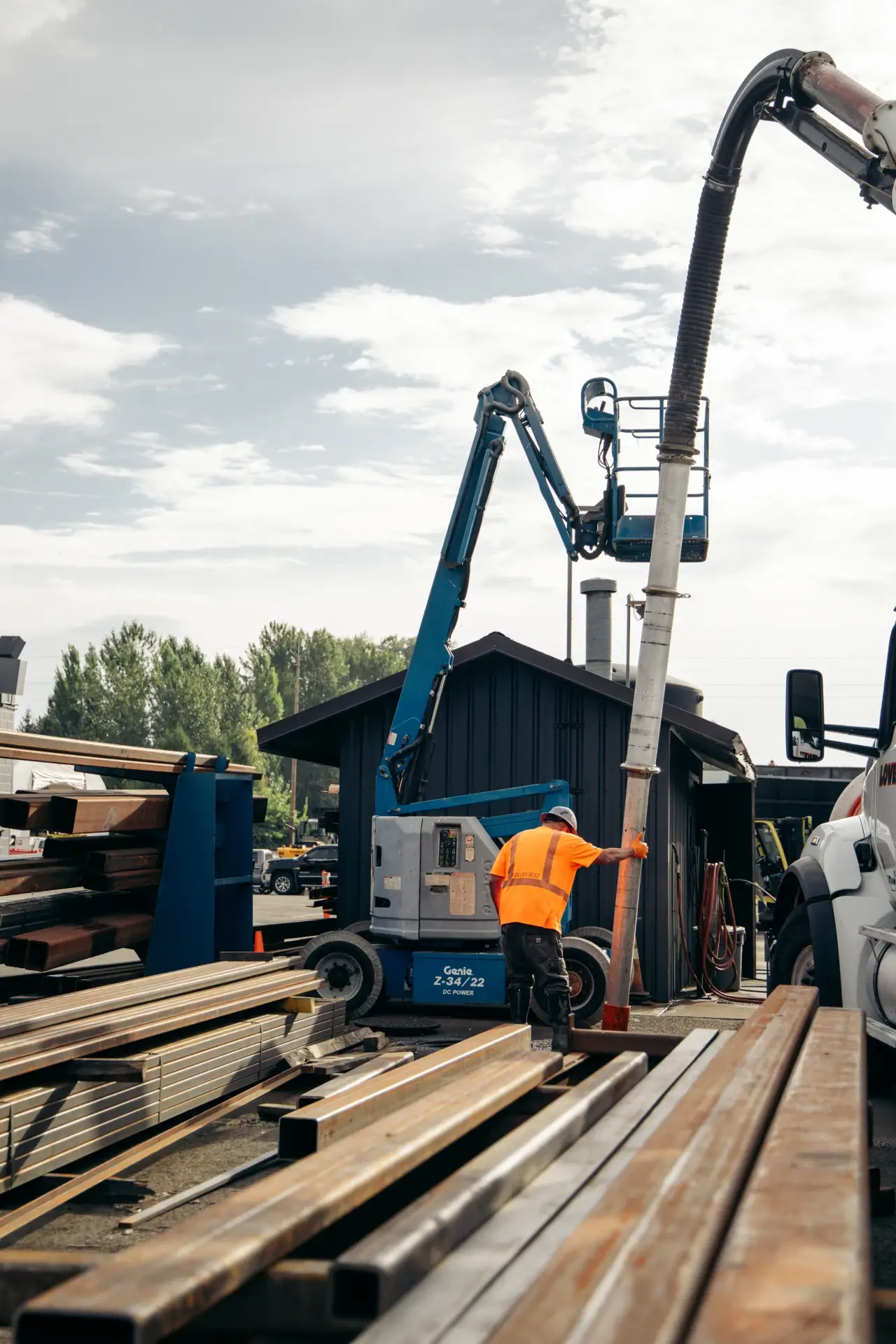
01 Vacuum the Sludge Out of Your Catch Basins
The Commercial Risk
Storm drains trap leaves, grit, and parking lot debris before runoff reaches municipal lines. Under the dense tree canopy in our region, basins fill with thick sediment fast. When torrential rain hits a choked basin, runoff floods parking stalls, degrades asphalt, and breaches entryways.
The Solution
Do not wait for standing water. Bring in an industrial vactor truck to vacuum mud, organic sludge, and debris completely down to the sump floor, resetting full intake capacity.
Property Tip
Clear leaves off street grates near access drives so perimeter runoff does not divert straight into ground level bays or garages.
02 Swap Underground Stormwater Filter Cartridges
The Commercial Risk
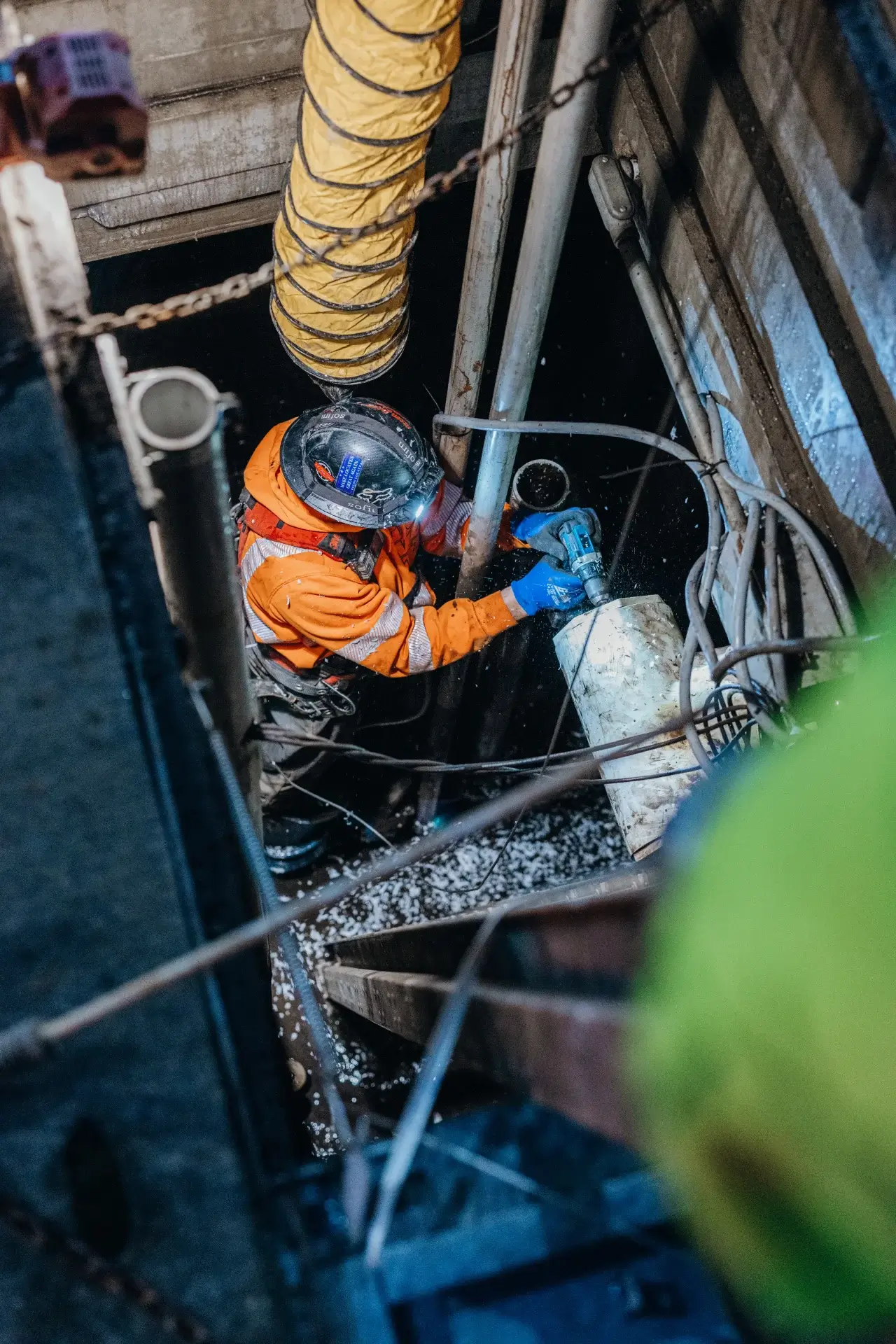
Subterranean filtration vaults take heavy loads during early storm surges. When media filters clog with silt, untreated runoff bypasses filtration into local waterways, triggering severe environmental fines from regulatory authorities.
The Solution
Deploy certified confined space technicians to descend into the vault, extract spent filter media, install fresh cartridges, and submit official compliance documentation for municipal records.
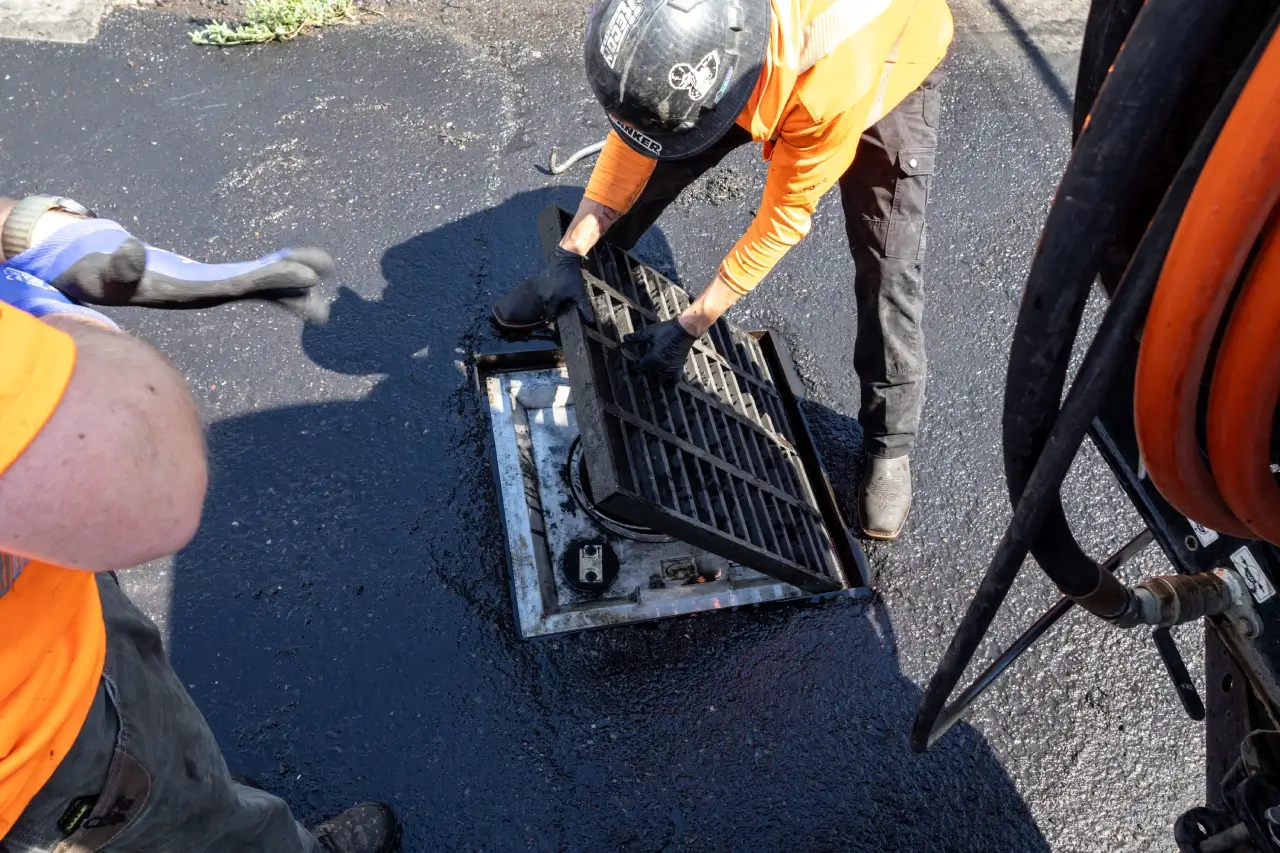
03 Test Sump Pumps, Lift Stations and Float Switches
The Commercial Risk
Subgrade facilities and parking structures rely completely on mechanical lift systems to pump water up to municipal sewer mains. A stuck float or burnt out motor during peak rainfall can leave lower levels under water within 30 minutes.
The Solution
Audit electrical pump draw, clean accumulated grease or grit off float switches, verify automatic battery backups, and set up duplex pump setups with alternate lead lag controls.
04 Blast Main Drainage Lines with 4,000 PSI Hydro-Jetting
The Commercial Risk
Summer conditions allow grease, biological growth, and fine silt to settle inside main drainage runs. Mechanical snakes only punch narrow openings through obstructions, resulting in immediate backups when full seasonal volume arrives.
The Solution
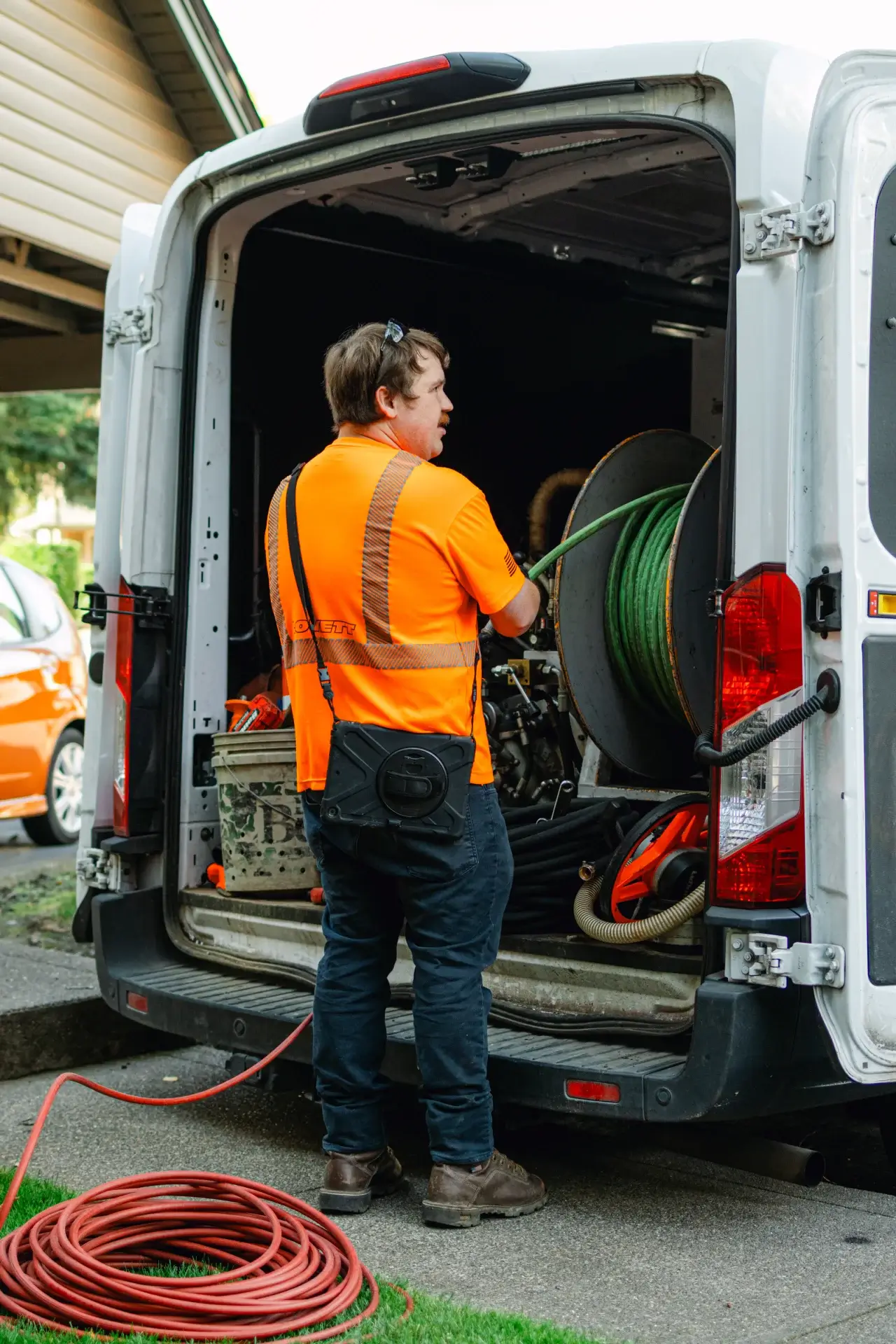
Hydro jetting uses commercial grade 4,000 PSI water streams to scour the internal circumference of the pipe, flushing out tree root mats, packed sediment, and grease accumulations.
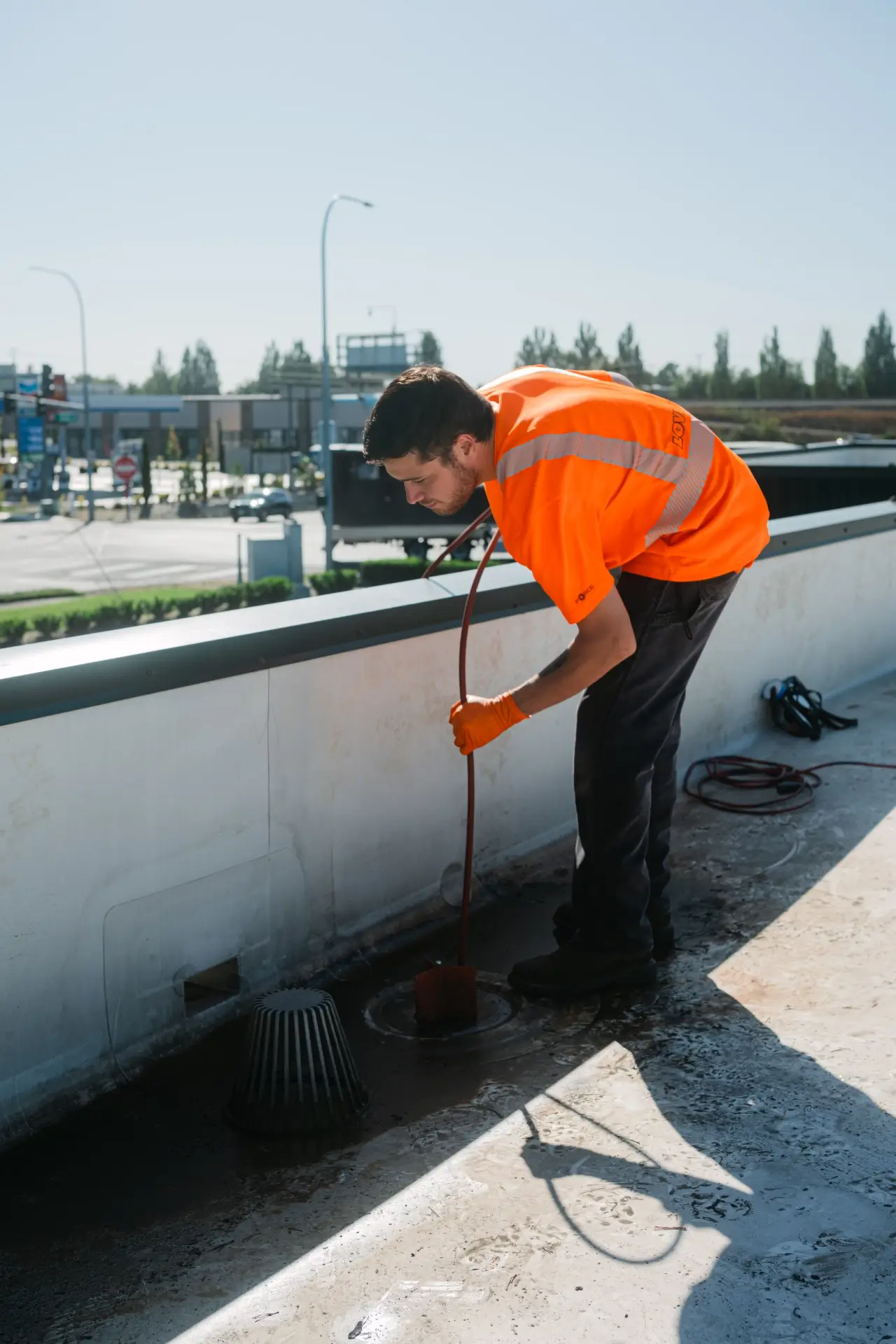
05 Clear Flat Roof Drains, Scuppers and Downspouts
The Commercial Risk
Water weighs roughly 8.3 pounds per gallon. Blocked scuppers and internal roof drains force rainwater to accumulate across flat commercial roof decks, leading to deflection, internal membrane failure, and expensive structural damage.
The Solution
Remove heavy organic debris around all drainage points, clean downspout boots, and fit heavy cast iron or stainless strainer domes to stop future blockages.
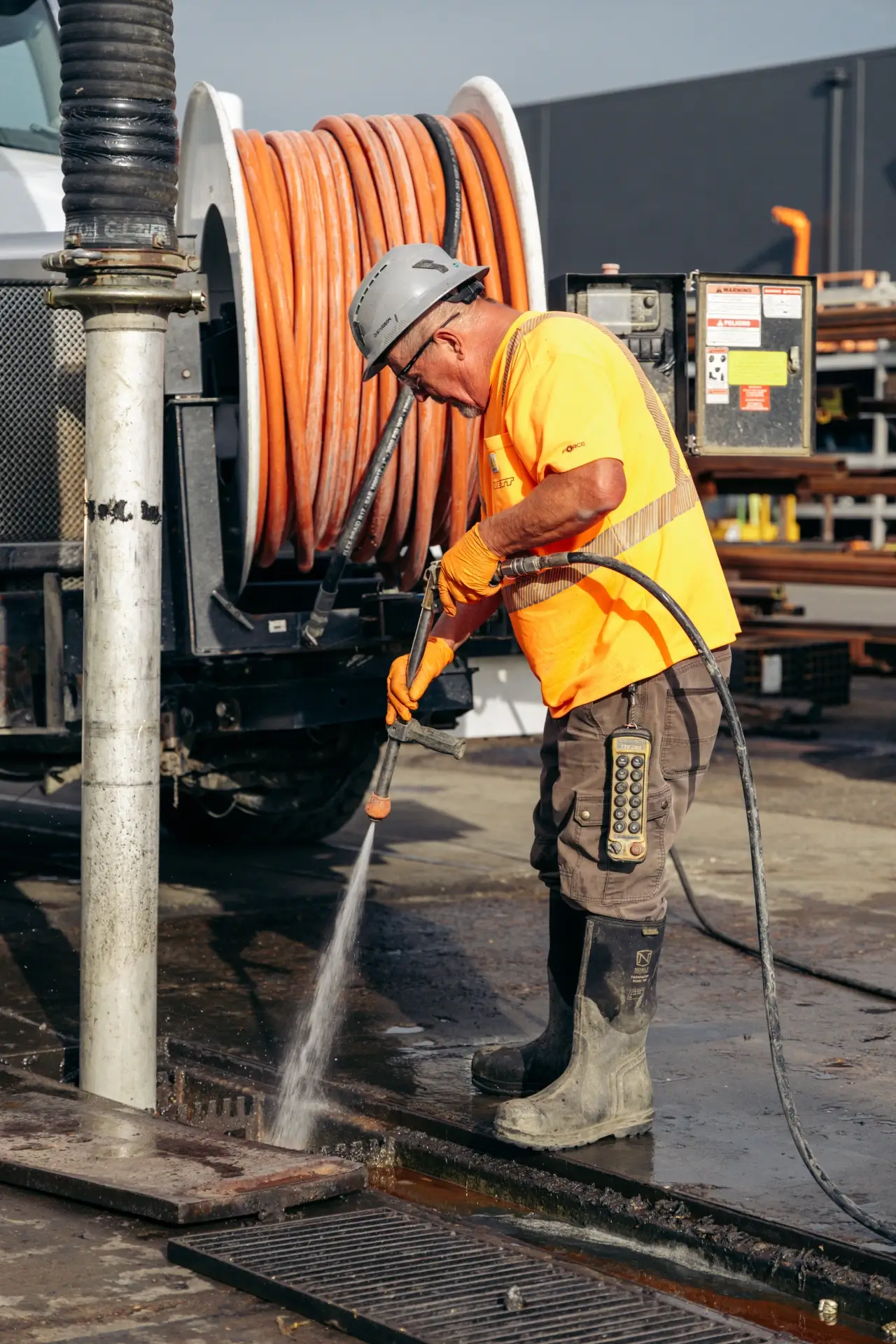
06 Clean Trench Drains and Loading Dock Slot Channels
The Commercial Risk
Trench drains located across loading bays, entrances, and ramps capture road gravel and falling leaves. Once packed tight, incoming water skips the channel entirely and pours directly inside warehouse floors or retail space.
The Solution
Lift channel grates, extract compacted silt with vacuum equipment, and perform a high volume flush down the discharge piping to confirm open outflow.
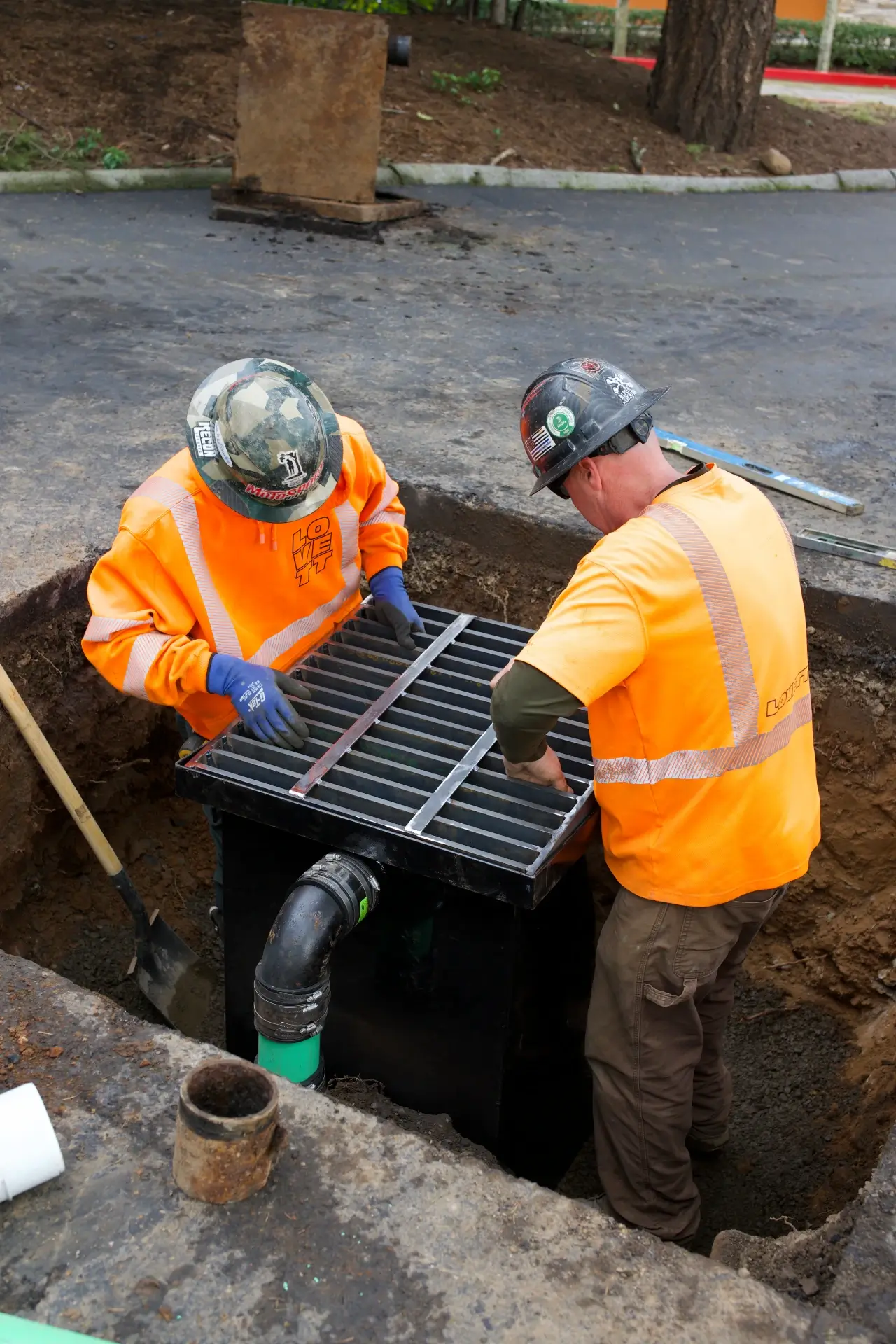
07 Inspect and Repair Crumbling Catch Basin Structures
The Commercial Risk
Years of freeze thaw cycles and traffic stress cause mortar and precast rings in storm basins to crack. Water escapes into surrounding structural base material, washing away soil and generating hidden voids under the surface.
The Solution
Rebuild failing brick collars, secure shifting frame castings, and complete structural concrete repairs early to avoid sinkholes and parking lot collapses.
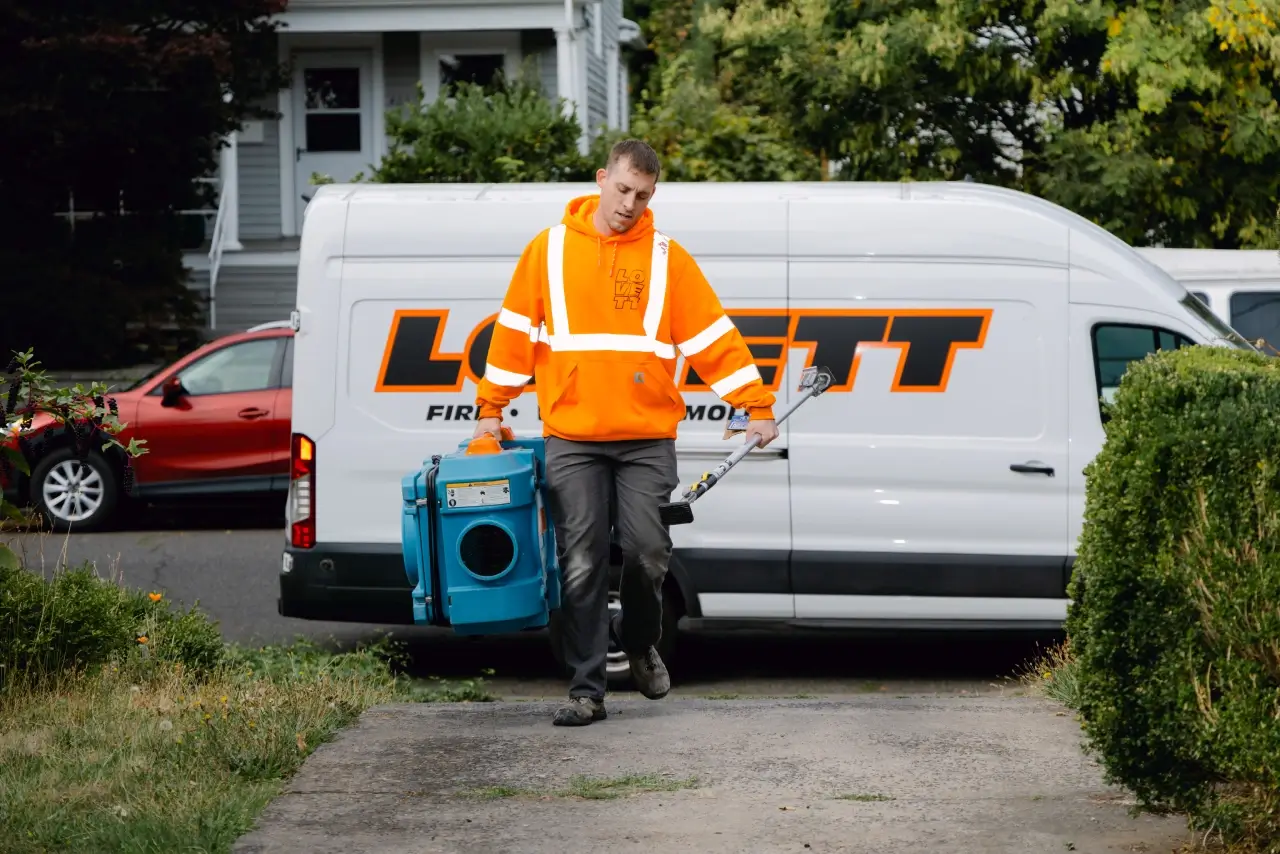
08 Act Fast on Water Mitigation and Moisture Control
The Commercial Risk
Clean water intrusion degrades rapidly once in contact with building assemblies. Standing moisture left unattended inside wall cavities supports aggressive microbial growth in as little as 24 to 48 hours.
The Solution
Deploy high volume extraction units, thermal moisture scanning cameras, and industrial LGR dehumidification setups immediately to pull moisture out of structural elements before mold develops.
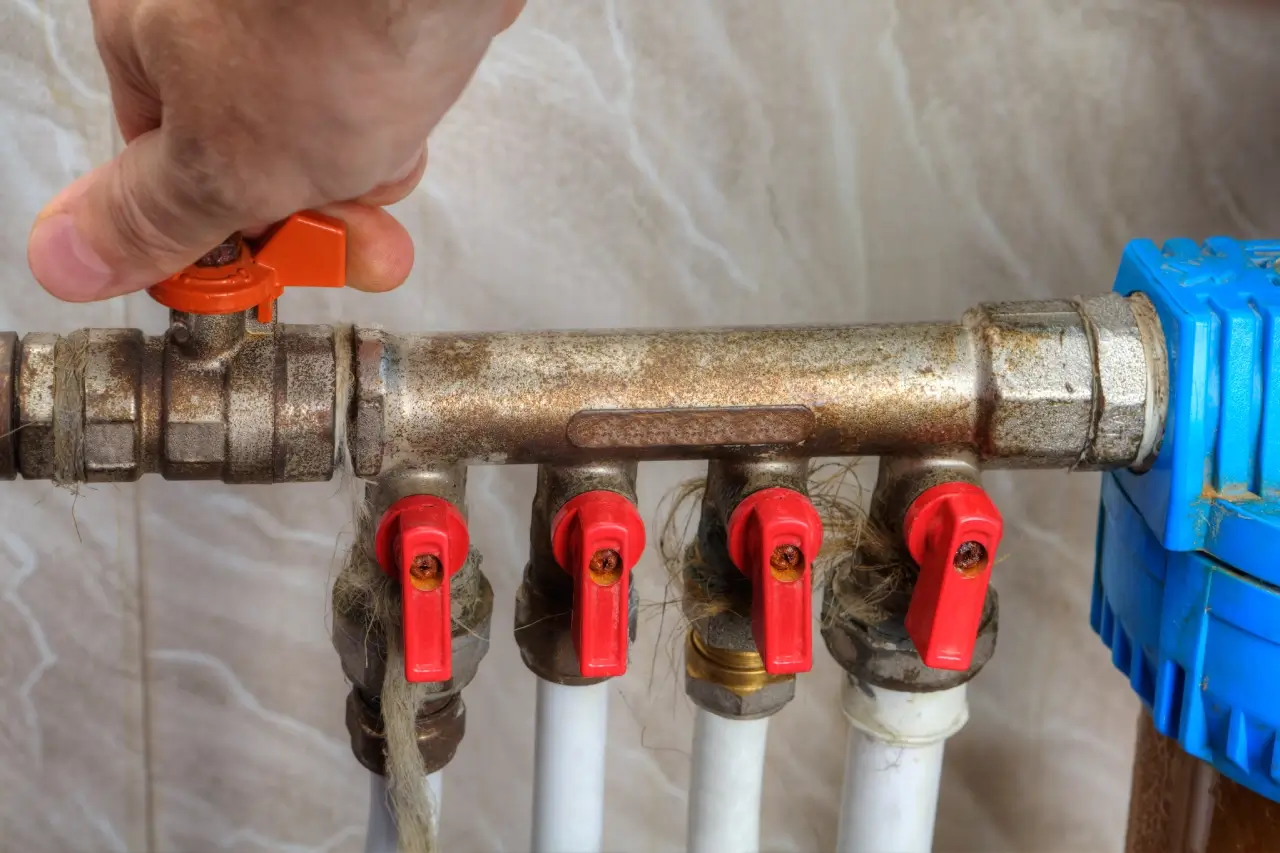
09 Map Emergency Main Water Shut-Off Valves
The Commercial Risk
Scrambling to find an isolation valve while high pressure water floods an interior space causes thousands of dollars in compounding damage every minute. Exterior street shut-offs are frequently buried under turf or sediment.
The Solution
Locate, clear, and exercise every main water shut-off. Label all valves clearly and supply building maintenance personnel with direct isolation maps for rapid response.
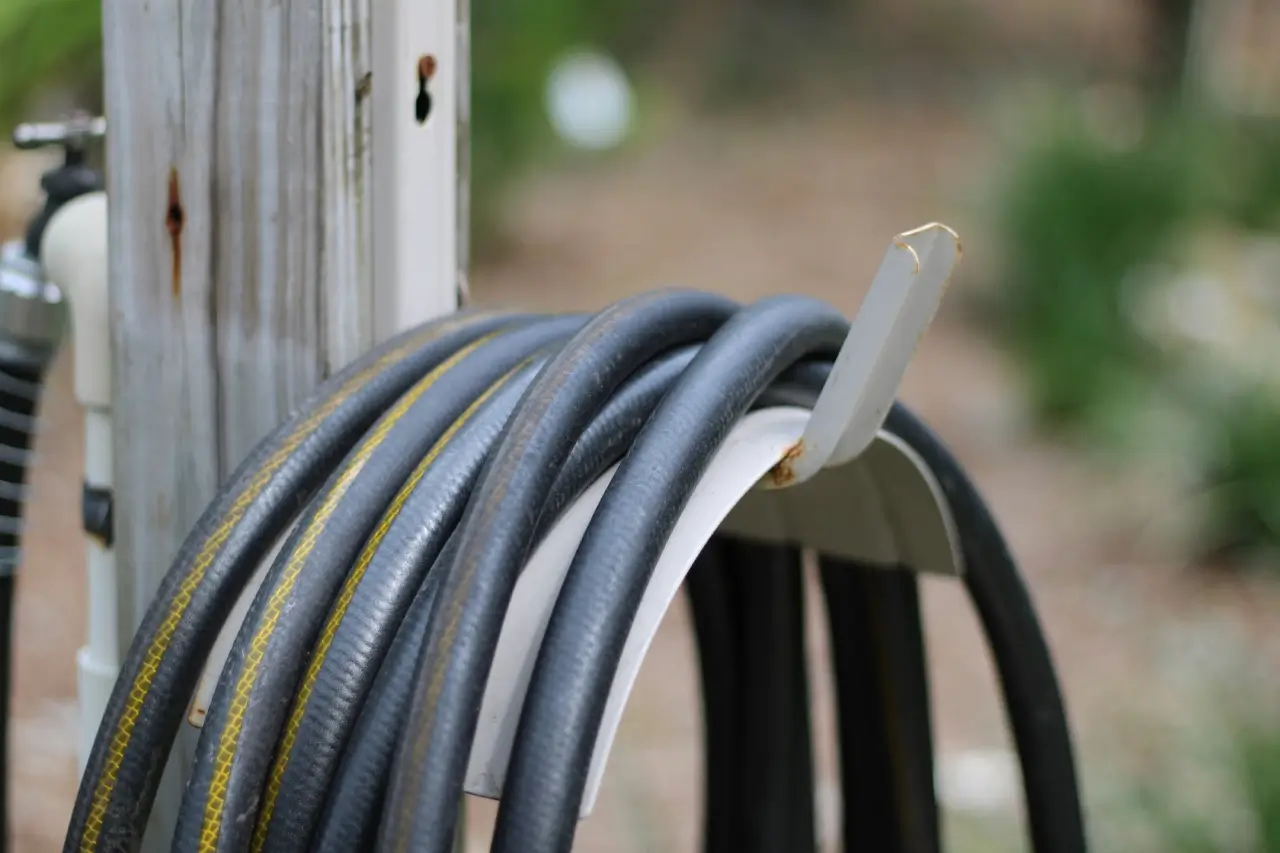
10 Disconnect Exterior Hoses and Install Frost-Proof Hose Bibs
The Commercial Risk
Leaving supply hoses attached to outdoor spigots traps water inside the valve housing. Sudden temperature drops cause that captured pocket to freeze and split the pipe wall internally, producing a concealed wall flood once thawed.
The Solution
Remove all hoses before freezing weather arrives. Convert standard spigots to commercial frost-proof valves that seat the actual shut-off mechanism deep inside the heated structure envelope.
11 Wrap Exposed Exterior and Attic Plumbing with Insulation
The Commercial Risk
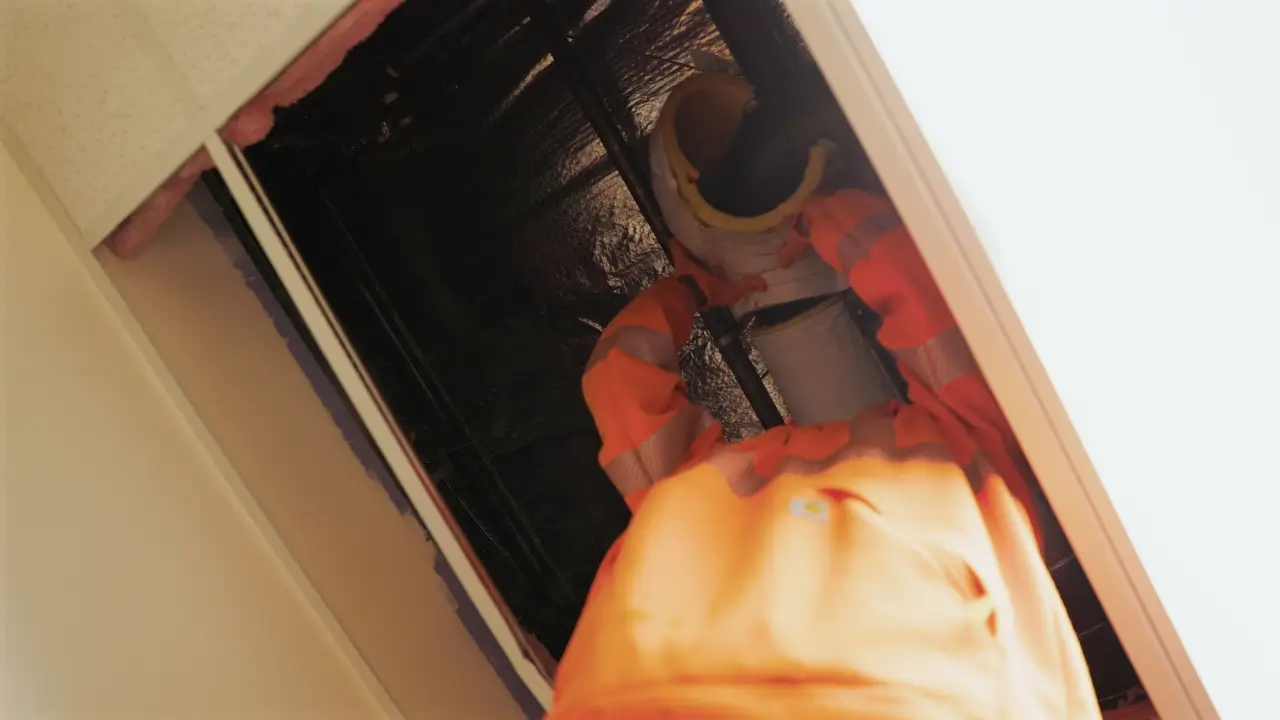
Cold drafts passing through warehouse loading zones, unheated crawlspaces, or utility rooms freeze uninsulated piping in a matter of hours, leading to high pressure line splits.
The Solution
Wrap vulnerable water runs with heavy duty closed cell foam or specialized fiberglass jacketing, making sure fittings, elbows, and wall penetrations receive full coverage.
12 Certify and Protect Backflow Preventer Assemblies
The Commercial Risk
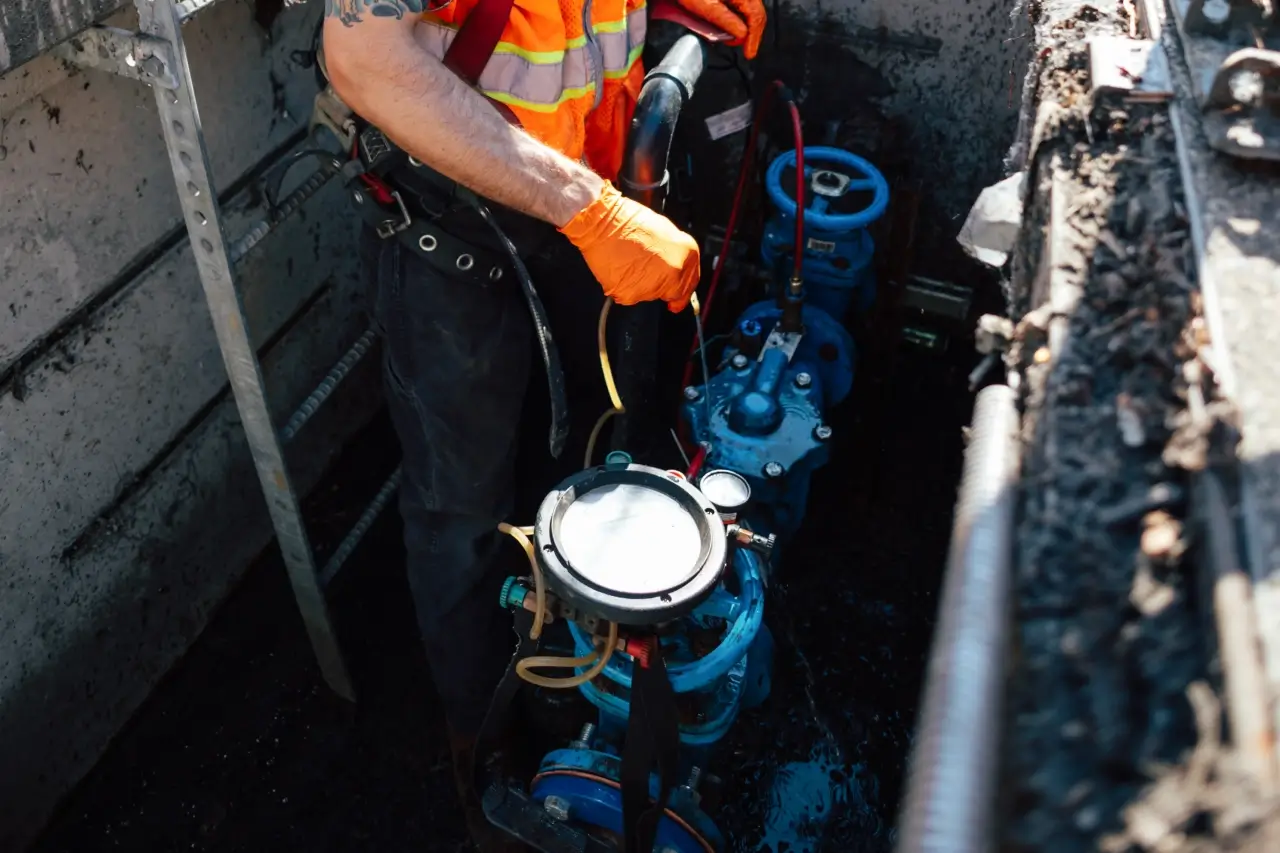
Backflow devices ensure non-potable cross connections do not contaminate main drinking supplies. Missing annual compliance tests brings city shut-off warnings and fines, while exterior freeze exposure can crack internal brass relief assemblies.
The Solution
Complete certified backflow tests well ahead of city deadlines. Protect exterior valves inside insulated, heated aluminum enclosures designed for freezing conditions.
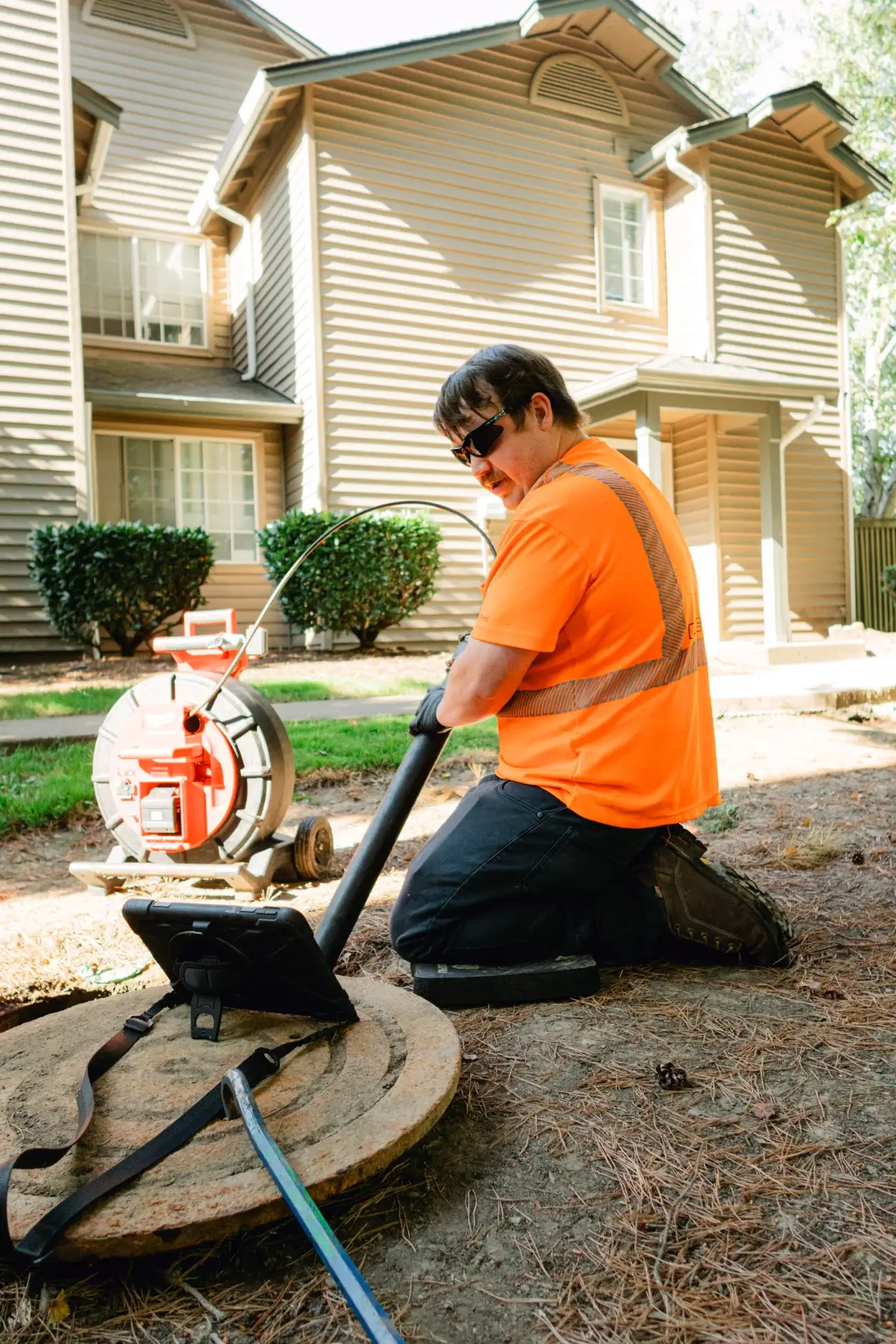
13 Camera Scope Main Sewer and Storm Lines for Roots and Rot
The Commercial Risk
Tree roots seek out underground moisture during warm months, infiltrating line joints and small cracks. As cold rains saturate the ground, structural pipe rot and root masses choke drainage flow, triggering building sewage backups and underground line collapses.
The Solution
Run a high resolution HD camera inspection through all main sewer and storm lines. Pinpoint internal rot, offset joints, root balls, or pipe belly dips on video so targeted mechanical cuts or trenchless repairs can be completed before total line failure.
14 Meticulously Document Water Losses for Insurance Claims
The Commercial Risk
Insurance adjusters regularly deny commercial water losses by classifying structural damage as long standing neglect or progressive wear rather than an acute event.
The Solution
Work with qualified restoration crews who record infrared thermography, psychrometric drying logs, and itemized scopes that demonstrate clear evidence of sudden, accidental storm loss and direct remediation.

Ready to Secure Your Property Before the Next Big Rainstorm?
Hiring multiple independent contractors leaves wide gaps in your defense against Pacific Northwest weather. Managing a separate vendor for hydro-jetting, another for plumbing repairs, and a third for water damage cleanup creates delays when speed matters most.
Lovett Services handles your entire underground and interior infrastructure. From Vactor truck pumping and 4,000 PSI hydro-jetting to camera line scoping, structural remediation, and freeze protection, we provide complete property protection under one roof.