Before anything is quoted
Always dispatching
We handle the jurisdiction
Before work starts
On our workmanship
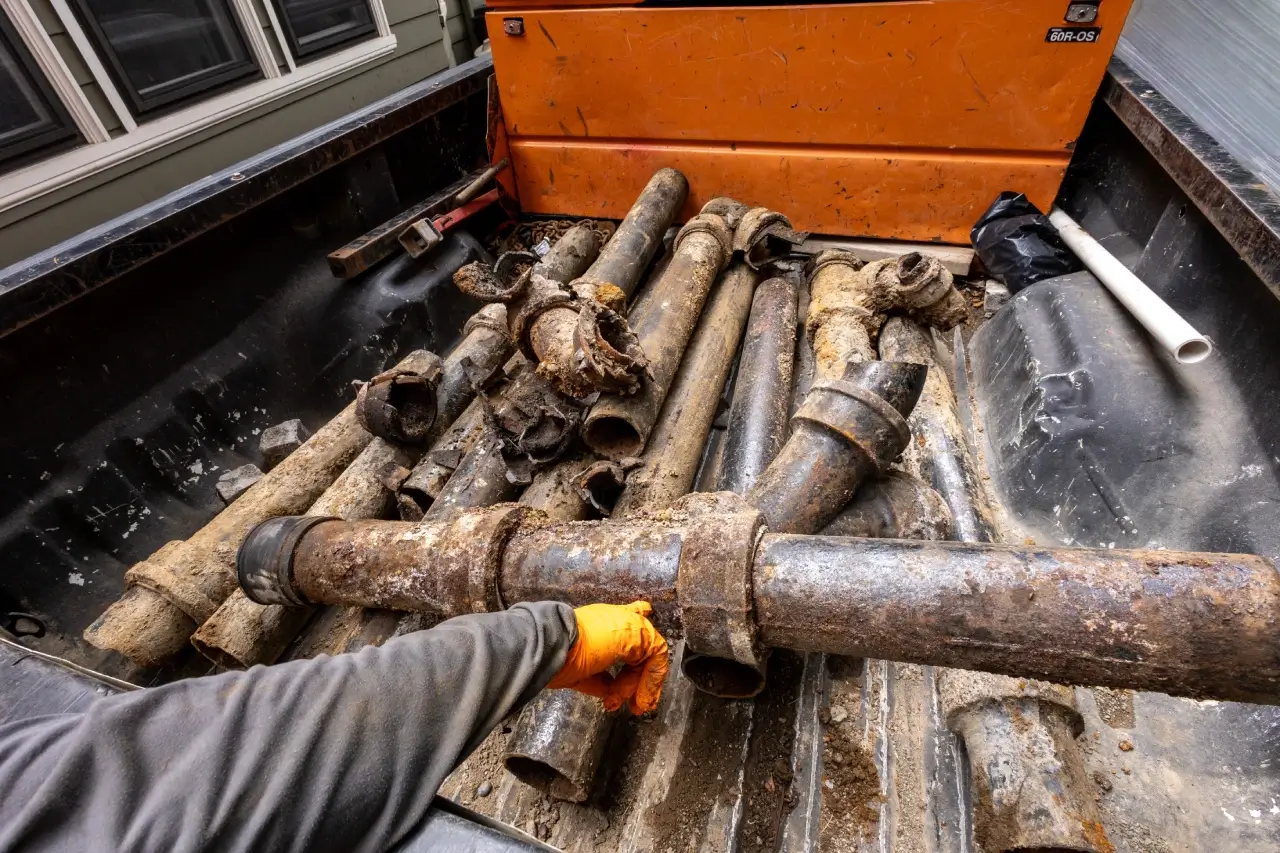
Sewer line repair from Lovett starts with a camera scope of the Portland lateral, then spot repair, lining, pipe bursting or full replacement, whichever the footage supports, with a written price first.
A sewer line fails out of sight and gives its warnings indirectly. We camera the line before quoting anything, show you what is actually down there, and repair or replace it with the least disruptive method the route allows.
A sewer line is the one pipe on a property with no redundancy and no easy inspection. Everything that drains goes through it, it runs under ground that moves, and it is usually the oldest piece of plumbing on site. It is also the one failure that makes a building unusable rather than merely inconvenient, because the alternative to a working sewer is no working fixtures at all.
Most failures are not sudden. Fine roots enter at a joint and thicken into a mesh that catches solids. Ground settlement pulls a section into a low spot, a belly, where waste stands instead of flowing. Old clay tile cracks, cast iron corrodes from the inside, and Orangeburg, a fiber and bitumen pipe found in some mid-century properties, deforms and delaminates. Each of these narrows the line gradually, which is why backups get more frequent before they become permanent.
That gradual pattern is useful, because it means the line tells you what is coming if anybody looks. Multiple fixtures draining slowly at once, gurgling when another fixture runs, sewage odor in a yard or a basement, or a stripe of unusually lush grass along the pipe route are all signs the line is losing capacity. A camera survey converts those symptoms into a diagnosis with a measured distance.
Lovett has been repairing and replacing sewer lines across the Portland metro and Southwest Washington since 1997, under Oregon and Washington LOVETEI995KQ. We scope before we quote, we pull the permits, and we back the work with a 1-year workmanship warranty.
Any one of these on its own can be a local blockage. Two or more together usually means the main line, and that is the point to scope it rather than clear it again.
One slow drain is usually local to that fixture. Several going slow together, particularly the lowest ones in the building, points at the shared line they all feed into. The lowest fixture is the first to show it and the first to back up, which is why basement and ground-floor bathrooms are where main line problems usually appear.
Running one fixture and hearing another gurgle means air is being pulled through the system because water cannot move freely past a restriction. It is one of the earliest audible signs of a main line losing capacity, and it usually starts months before the first real backup.
A sealed sewer system should not be detectable. Odor in a basement, a crawlspace, or over a section of the yard means waste gas or waste water is escaping the line, which means a crack, an open joint or a failed connection. It is also the sign most often dismissed, because it comes and goes with weather and ground conditions.
A stripe of unusually green or fast-growing grass, a persistently soft patch, or a small depression tracking the line route means water is leaving the pipe underground. Roots follow that moisture, which is why the leak and the root intrusion are usually the same problem at the same joint.
This sequence is identical on a single-family lateral and a building main. The equipment gets larger, the method does not change.
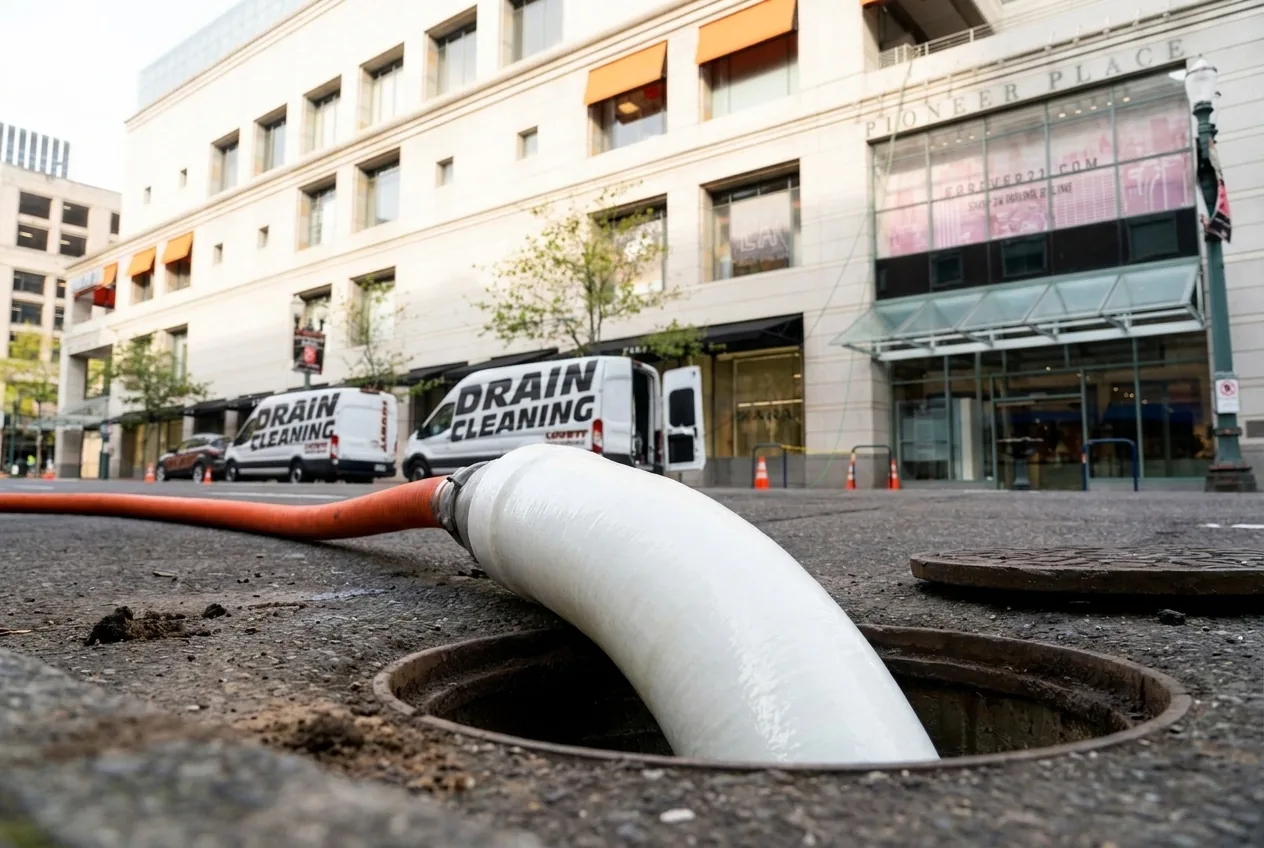
A line full of standing water or packed with root mass cannot be assessed. Where access is blocked we cable or jet first, which restores flow and gives the camera a clear run. Cabling opens the line and cuts roots back; hydro jetting scours the full pipe diameter and removes grease, scale and root fiber that cabling leaves on the wall. Which one we use depends on what is in the pipe and what the pipe is made of.
A camera runs the full length from the access point to the public main, recording as it goes. It shows the pipe material, its condition, and every defect: root intrusion, cracks, offset joints, bellies, deformation and collapse. The on-screen counter gives the distance to each defect and the camera's transmitter lets us mark the position on the surface, generally within a foot or two. You get the findings and the footage.
We tell you what the line is, what is wrong with it, and what your actual options are: spot repair, lining, pipe bursting, or open-cut replacement. The recommendation is tied to the footage rather than asserted. The written scope covers the method, the route, what gets opened, what gets restored, the permit and inspection requirements, and the schedule.
Sewer repairs and replacements require permits and inspections across Portland and the surrounding jurisdictions. We pull the permit, book the public utility locates, coordinate right-of-way requirements where the work reaches the main, and schedule around access constraints. On an occupied building that also means agreeing the shutdown windows before anything starts.
The work is done with the agreed method, then the line is camera-tested and flow-tested to confirm grade and function. The jurisdiction inspects. Excavated ground is backfilled and compacted properly so it does not settle later, and surfaces are restored to the written scope. The workmanship carries our 1-year warranty.
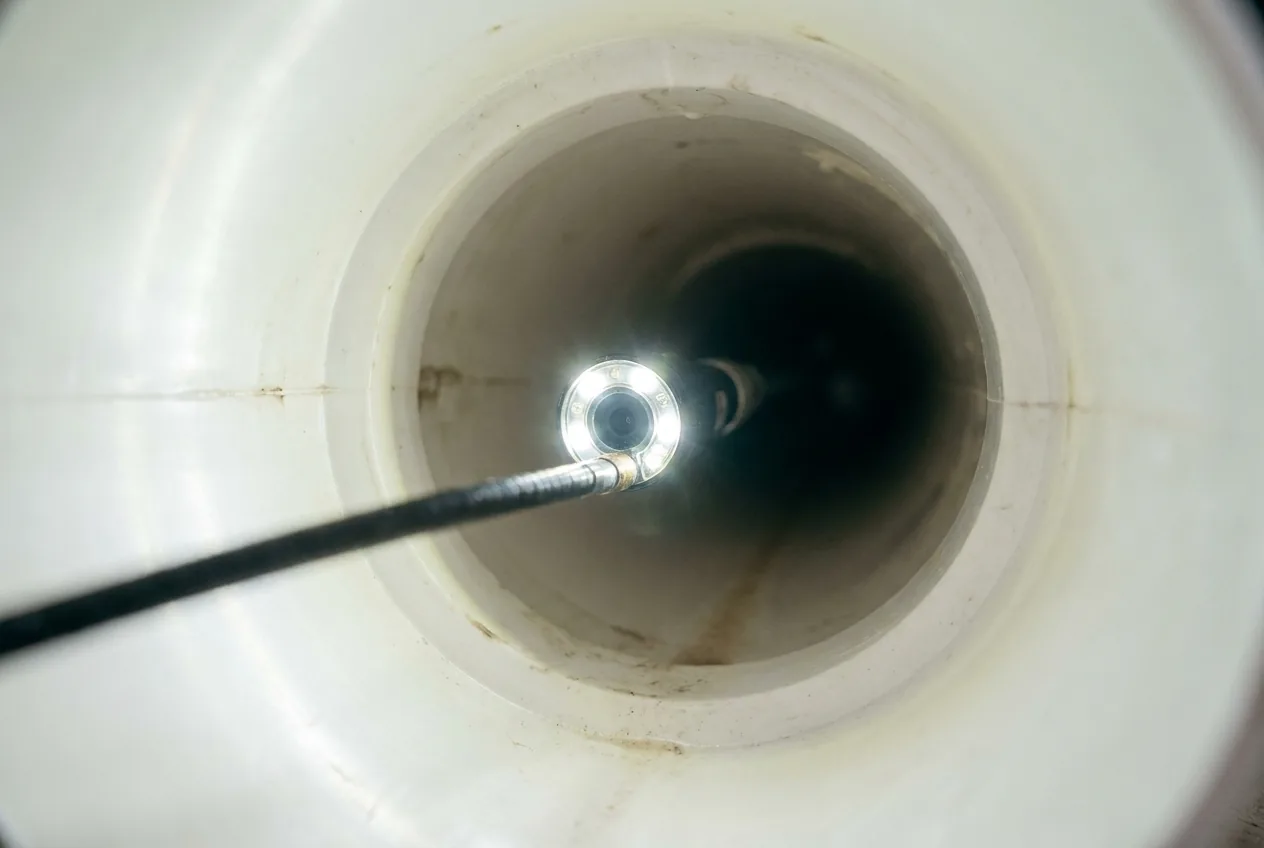
The right method is decided by the footage, not by preference. A line with one defect and sound pipe either side is a different job from a line that has reached the end of its material life.
A resin-saturated liner is drawn into the existing pipe and cured to form a new jointless pipe inside the old one. Because the new wall has no joints, it removes the entry points roots use. It needs a host pipe with enough structural integrity left to line against, which the camera survey establishes. Access is through existing openings and small pits rather than a trench.

A bursting head is pulled through the old line, fracturing it outward into the surrounding soil while drawing a new solid pipe in behind it. It replaces the line entirely rather than lining it, which makes it the route for pipe that is too far gone to line, and it can upsize the line at the same time. Two access pits instead of a trench, so driveways, lawns and paving mostly stay where they are.
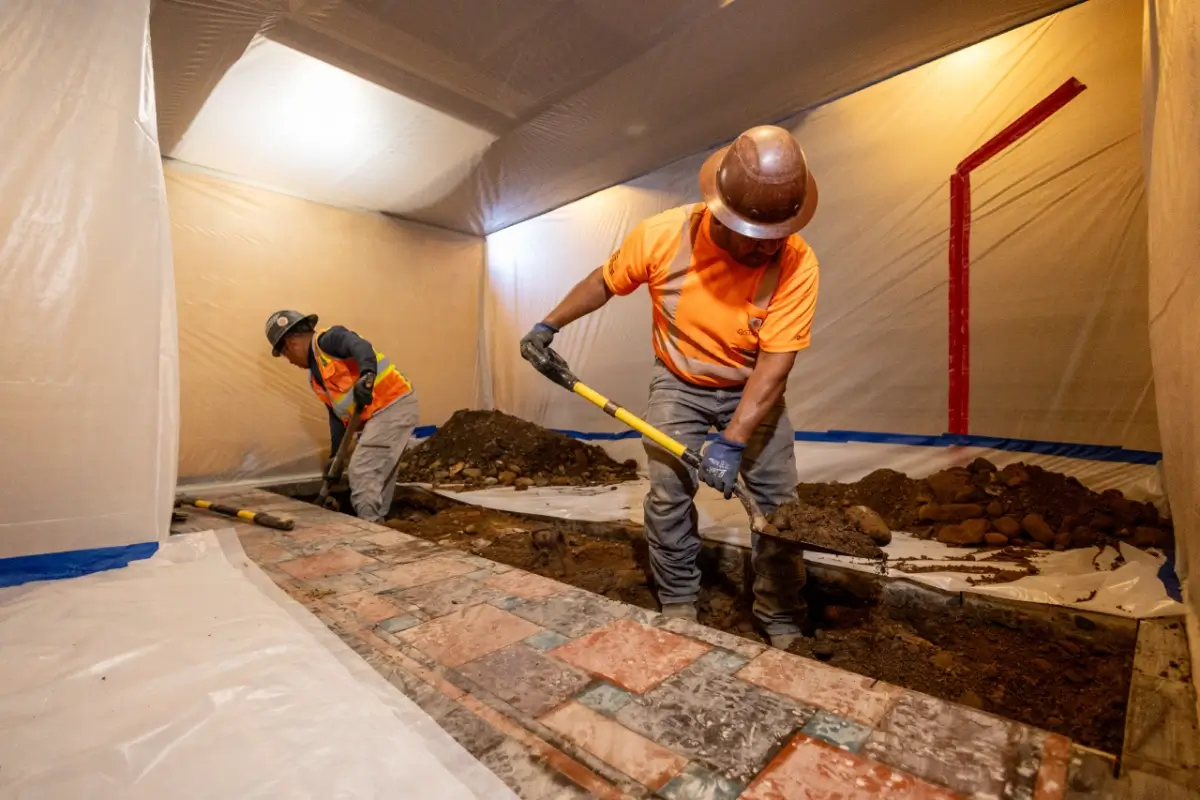
Sometimes the ground has to be opened: a complete collapse with no path for a bursting head, a belly that needs the grade physically re-established, a connection change at the main, or a route too congested with other utilities to work blind. We isolate and shore the dig zone to code, replace the run, re-establish correct fall, compact the backfill, and restore the surface.
Roots do not drill through pipe, they find openings. Clay tile laterals fail at their joints because that is where the gaps are. A lined or burst-in replacement is continuous through the run, which removes the entry points rather than cutting back what came through them.
PVC and HDPE do not corrode from the inside the way cast iron does, do not soften the way Orangeburg does, and tolerate ground movement better than rigid clay. Properly installed, a modern sewer line is a 50-year-plus asset under normal conditions rather than a maintenance item.
A sewer line works on gravity, so grade is the whole job. Most bellies are the result of poorly compacted bedding settling under the pipe after the fact. We set fall to spec, bed and compact properly, and confirm the result with a post-repair camera run rather than assuming it.
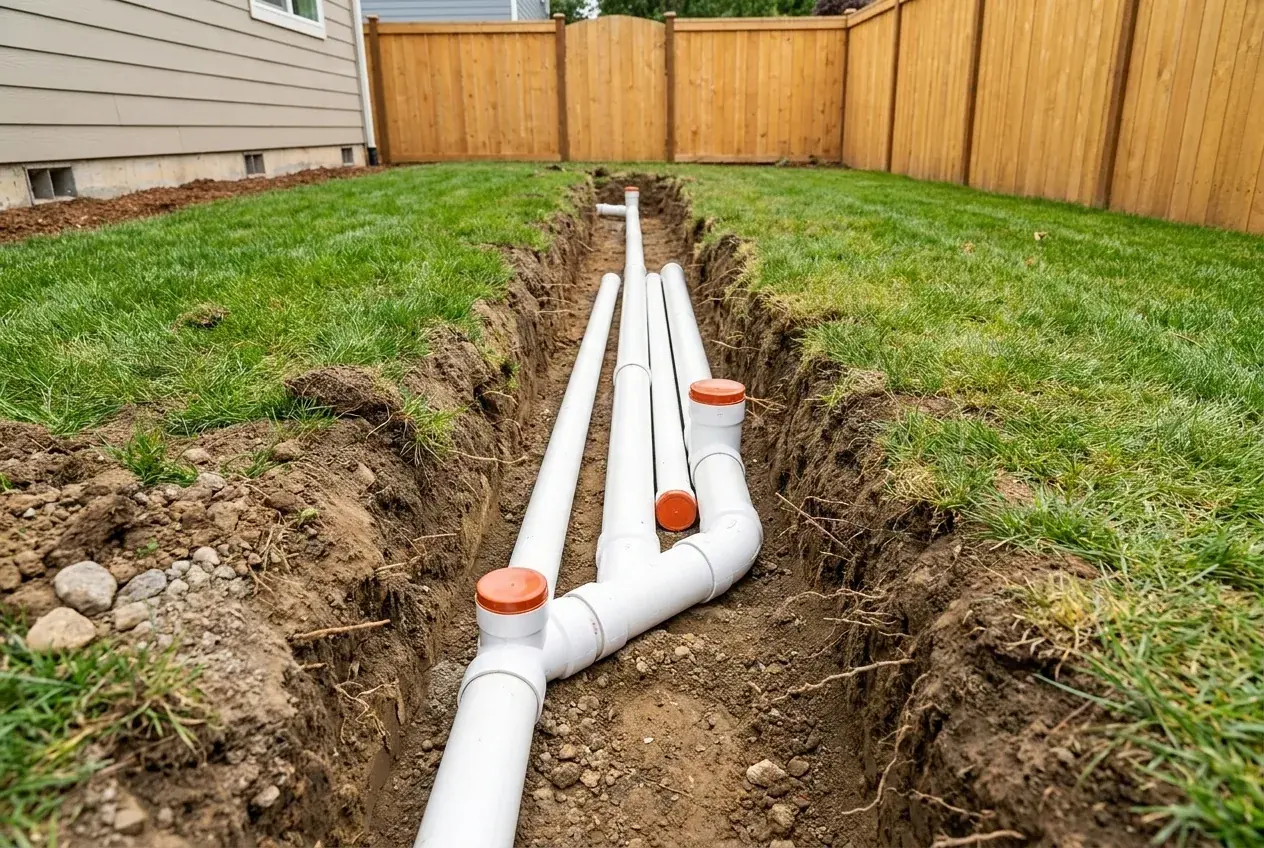
The two questions we get asked first are how much of the yard comes up and how long the house is without a usable bathroom. Trenchless answers the first one: access pits at either end rather than a trench along the whole run, which leaves lawn, planting, driveway and patio largely intact. We confirm it is viable from the footage and the utility locates before committing to it. The second answer is usually shorter than people expect, because most of a sewer project is permits, locates and inspection rather than days without drainage, and we schedule the disruptive part rather than letting it sprawl.
It is worth knowing where insurance sits before you call your carrier. Standard homeowner policies generally do not cover sewer line failure caused by age, wear or progressive root intrusion, which is what most of these are. Sudden accidental damage, or a specific sewer backup endorsement added to the policy, can be a different story. Check your own policy rather than assume either way, and ask us for the footage and the written scope, because that is what a carrier will want to see.
If you are buying a house, scope the line before you close. A standard home inspection almost never includes the sewer lateral, and a failing line is one of the more expensive things a new owner can inherit. A camera survey during the inspection period costs a fraction of the repair and gives you something concrete to negotiate with.

On a building rather than a house, the sewer line is a continuity problem before it is a plumbing problem. A blocked or collapsed main means no usable restrooms, no kitchen, and on a residential building a habitability issue with a clock on it. The technical work is the same work described above. What changes is sequencing, notification and evidence.
Multifamily. The building main carries every unit, so a shutdown is a whole-building event unless it is staged. We work from the camera survey to identify which runs can be isolated, schedule the disruptive phases in agreed windows, and give you the notice periods your tenant obligations require. Where a property is on a shared or legacy connection, a party sewer, that has to be established before anything else, because it changes both the scope and who is responsible for it.
Commercial and institutional. Restaurants, kitchens and food service lines fail on grease rather than roots, which changes both the clearing method and the maintenance cadence that follows. Buildings with a health inspection, a public-facing operation or a tenant lease that specifies uptime need the repair scheduled around hours rather than squeezed into them. We handle permit and right-of-way requirements where the work reaches the main, and provide documentation for the file at every stage.
The record matters as much as the repair. You get pre-repair footage, the written scope, the permit and inspection record, and a post-repair camera run confirming grade and flow. That is what goes to your owner, your board, your insurer or your municipality. Where a replacement crosses into site work, traffic control, surface restoration or public works documentation, it is scoped through our excavation and civil site crews in the same contract rather than handed to a second vendor.
“Chad and Peter came out on very short notice to investigate a clogged drainage pipe outside my home. They diagnosed the problem (tree roots in the drainage line), listed my options (and estimated costs), and let me decide how to handle it. Excellent responsive service. Thank you, gentlemen!”
Homeowner, Verified Google Review
“We had an emergency last night at our community. I called Lovett and got an actual person on the phone right away. The drain proved to be a significant challenge to clear but Sarah was bound and determined to clear it for our residents. She was there for hours and would not quit or give up! She even had to leave to grab more equipment and came back working late into the night.”
Property Manager
Dispatch reads every request and the right crew calls you back. For an active leak or backup, call instead.
Read by our dispatch team, normally answered within one business day. For an active leak or backup, call 971-204-8148 instead.
971-204-8148. A live dispatcher answers 24/7, including weekends and holidays.
info@lovettservices.com
6920 NE 42nd Ave
Portland, OR 97218
Mon to Fri 7am to 5pm
24/7 Emergency Dispatch
Several fixtures draining slowly at the same time, gurgling from one fixture when another runs, sewage odor inside or over the yard, repeated backups at the lowest drain in the building, and a stripe of unusually lush grass or soft ground along the pipe route. Any one of those alone can be local. Two or more together points at the main line, and that is the point to camera it rather than clear it again.
Tree root intrusion is the most common cause, particularly in older neighborhoods where mature trees sit near clay tile or Orangeburg laterals whose joints let fine roots in. After that: age-related deterioration of the pipe material itself, cast iron corroding from the inside, ground movement pulling sections out of grade and creating low spots, and crushing or offset joints from settlement. Properties built before the 1970s frequently have the materials most prone to all of this.
Often not. Where the route, the soil and the condition of the host pipe allow, we line the existing pipe or replace it by pipe bursting, both of which work from access pits at either end rather than an open trench along the run. Lawns, driveways and paving mostly stay intact. Open-cut is the right method where the line has fully collapsed, where a belly needs the grade physically rebuilt, where the connection at the main is changing, or where other utilities make working blind unsafe.
Lining installs a resin-saturated sleeve inside the existing pipe and cures it into a new jointless pipe. It needs a host pipe with enough structure left to line against. Pipe bursting replaces the line entirely: a bursting head fractures the old pipe outward while pulling a new solid pipe in behind it, which is the route when the existing pipe is too deteriorated to line, and it can increase the line size at the same time. The camera survey decides which one applies.
The physical work is usually the shortest part. A spot repair can be a single day. Trenchless lining or bursting on a residential lateral commonly runs one to two days. Open-cut replacement takes longer and depends on depth, length, soil and what is above it. The full timeline is longer than the digging because it includes utility locates, permit approval and final inspection, all of which sit with third parties. Plan in weeks end to end and start the survey early.
We do. Sewer repairs and replacements require permits and inspections across Portland and the surrounding jurisdictions. Lovett pulls the permit, books the public utility locates, coordinates any right-of-way requirements where the work reaches the public main, schedules the inspection, and makes sure the completed work is recorded. You do not manage that process.
Usually not for the most common causes. Standard policies generally exclude failure from age, wear and progressive root intrusion, which covers most sewer line failures. Sudden accidental damage may be treated differently, and some policies carry a specific sewer backup endorsement. Check your own policy rather than assume, and keep the camera footage and written scope, because that is the evidence a carrier will ask for.
A correctly installed PVC or HDPE sewer line is a 50-year-plus asset under normal ground conditions. A properly cured liner is rated in decades as well. The variables that actually decide it are the pipe material, how well the bedding was compacted, the grade it was set to, and how root pressure around the route is managed over time. A post-repair camera run confirming fall and flow is part of the job, not an extra.
Yes, and the sequencing matters more than the digging. We work from the camera survey to identify which runs can be isolated, stage the disruptive phases into agreed windows rather than taking the whole building offline, and give you notice periods that fit your tenant obligations. You get pre-repair footage, the permit and inspection record, and a post-repair camera run for the file.
Yes, around the clock. A backed-up main is a health hazard and, in an occupied building, a habitability problem. The emergency call clears the line and makes the property usable; the camera survey immediately afterwards establishes why it happened and what the permanent fix is. Those are two separate decisions and we keep them separate rather than selling the second during the first.
(Answer 3 links “pipe bursting” to /pipe-bursting/. Answer 4 links “The camera survey” to /sewer-camera-inspection/. Answer 9 links “occupied apartment building” to /multifamily/. Answer 10 links “around the clock” to /emergency-plumber/.)
Diagnosis before, method during, and the shared-line question that changes the whole scope.
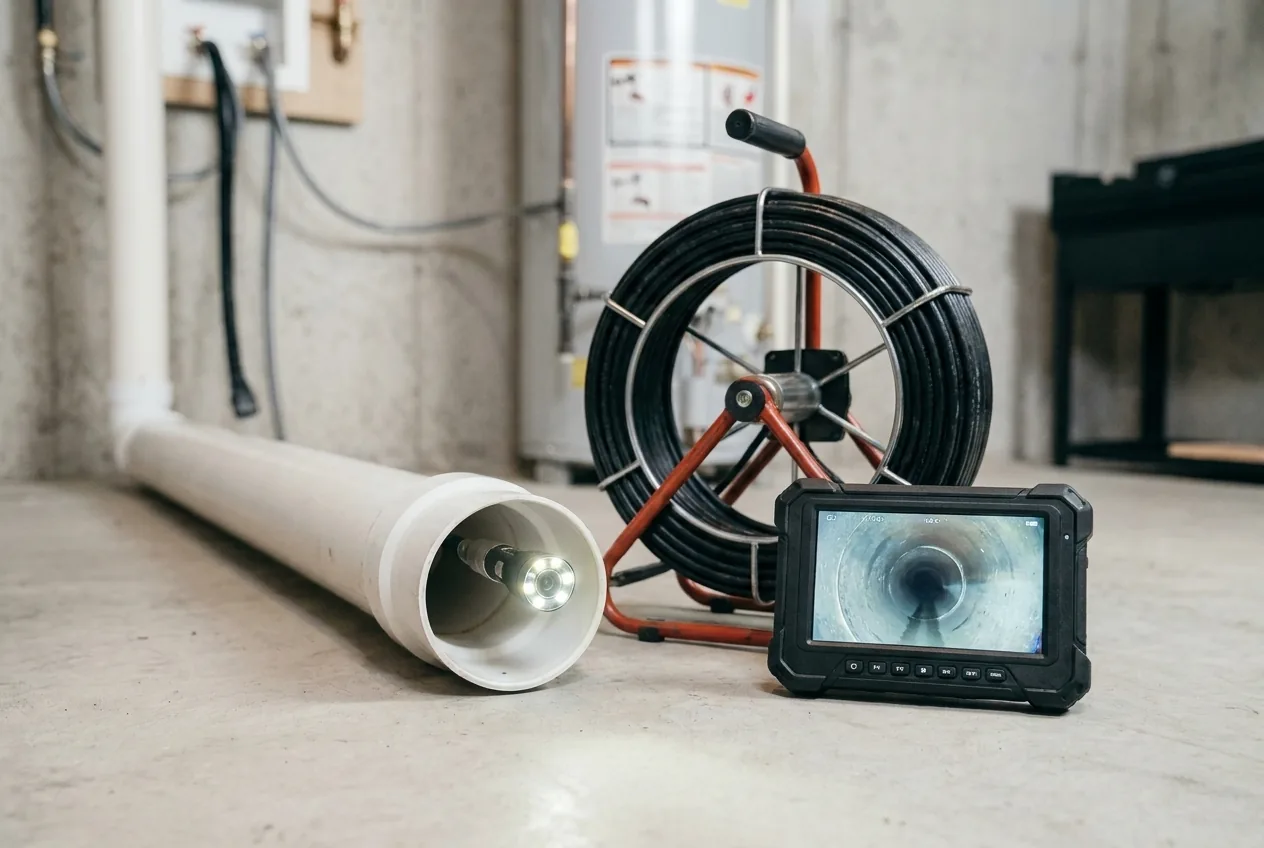
The survey that turns "the drains are slow" into a defect, a distance and a surface mark. Nothing here gets quoted without it, and buyers should run one before closing.
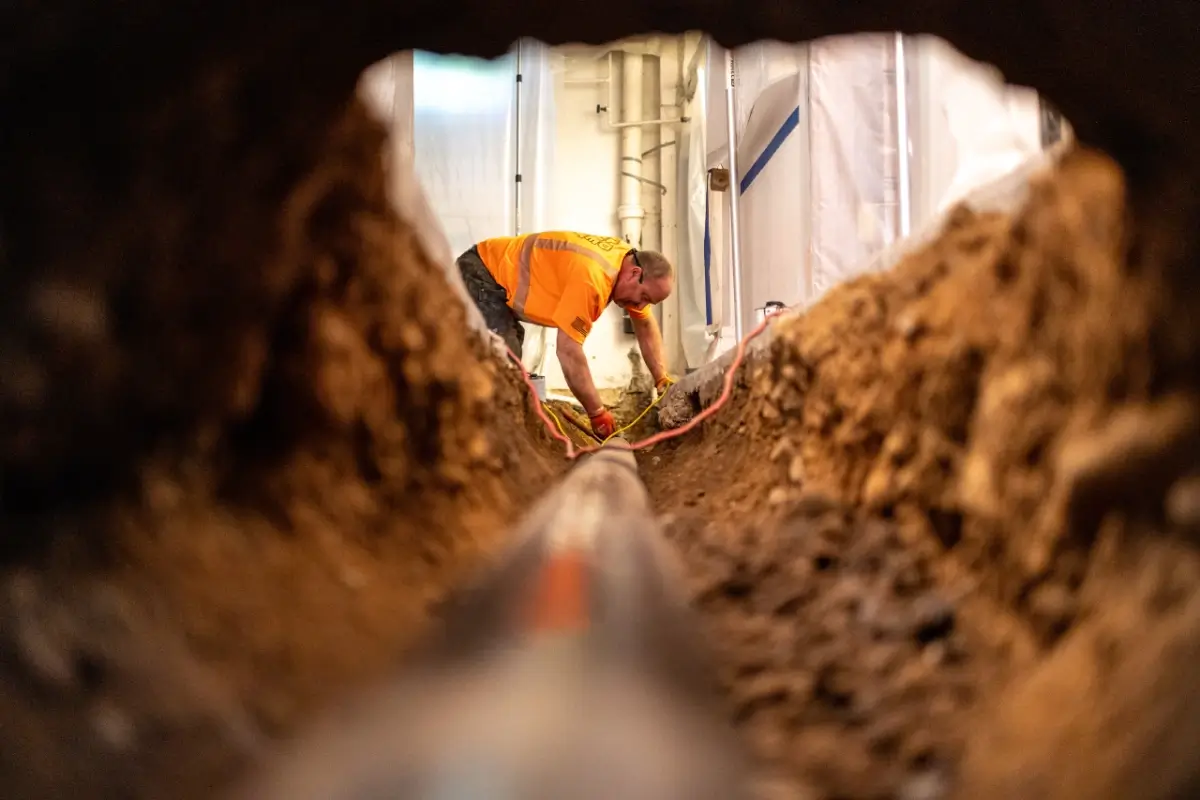
Replacing a line through access pits instead of a trench, including upsizing it on the way through. The method depth, when it works and when it does not, lives here.

If your line joins a neighbor's before it reaches the main, the repair decision and the responsibility for it both change. Separation is often required at sale.
A camera survey gives you the defect, the distance and the options in writing, so the repair decision is made on evidence. Serving Portland, the Willamette Valley and Southwest Washington since 1997.
4.9 Google rating from 500+ verified reviews · 1-year workmanship warranty · Free on-site estimates
