Always dispatching
Portland, Oregon
We handle the jurisdiction
Before work starts
On our workmanship

A party sewer line is one lateral shared by two or more Portland properties; Lovett maps the shared run, repairs it, and separates each property onto its own lateral with the permits the city requires.
One buried pipe carrying wastewater from two or more properties is a party sewer. It is common in older parts of the Portland metro, it is not how new lines are built, and it becomes your problem the moment it backs up or the moment you try to sell. We map it, fix it, or separate it.
A party sewer is a single lateral that collects wastewater from two or more separate properties before it reaches the public main. Builders installed them in the early to mid-1900s because one trench and one tap cost less than two, and in much of the older Portland metro housing stock they are still in the ground and still in service.
They work until they do not. Everything that enters that pipe from every connected property passes through the same run of clay or cast iron. Roots entering at one joint, a collapse at one point, or something flushed at one address becomes a backup at the lowest fixture on the line, which is frequently a basement or ground-floor bathroom that belongs to somebody who did nothing wrong.
The second problem is paperwork. Ownership of a shared lateral is split across private property lines, which means responsibility for a failure is split too. Jurisdictions across the metro commonly require separation before a property changes hands, and frequently require it when a significant repair or a permitted addition brings the line into scope. A party sewer discovered late in a transaction is a delay nobody planned for.
Lovett has been putting cameras and excavators into Portland’s underground since 1997, under Oregon and Washington LOVETEI995KQ. We find where the tie-in actually is, tell you what your jurisdiction requires, pull the permit, do the work, and get it inspected and recorded.
Shared laterals are unusual enough that most people meet one for the first time under pressure, either during a backup or during a sale. These are the four facts that shape every decision that follows.
A party sewer is a private pipe, not a public one. The public main is the jurisdiction's responsibility; everything between the building and that main is private. On a shared line that private run crosses more than one property, which is why a failure in it is a negotiation as often as it is a repair. The first job is establishing exactly where the tie-in sits and whose ground the failure is under.
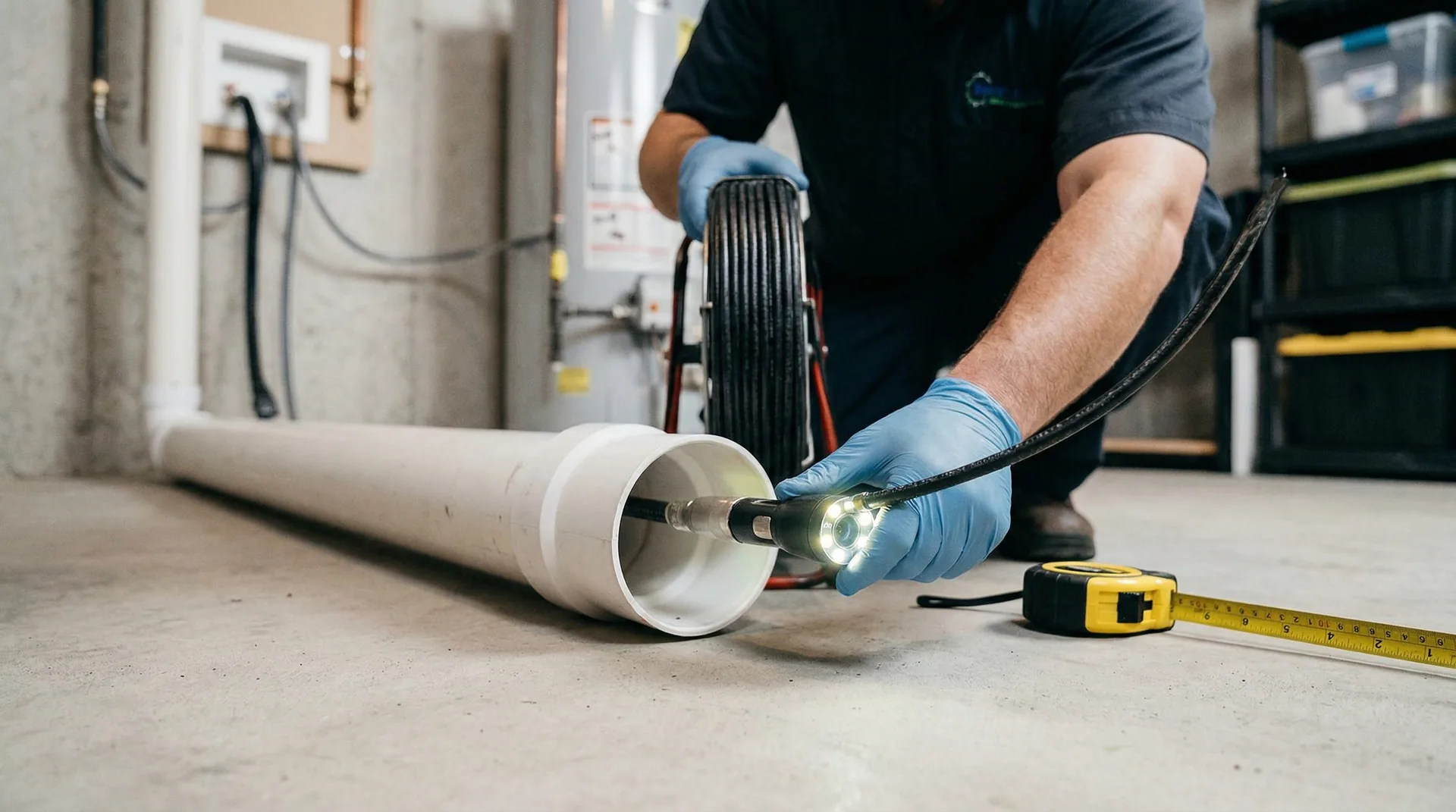
Deeds and disclosures are inconsistent about shared laterals, and plenty of owners have no idea they are on one. A camera pushed through the cleanout shows the tie-in directly: the point where a second line joins yours before reaching the main. The camera also carries a locator, so the tie-in gets marked on the surface to within a foot or two. That recording is the evidence everything else is built on.
Jurisdictions across the Portland metro commonly require a property on a shared lateral to separate onto its own connection at the point of sale, and frequently when a major repair or a permitted addition brings the line into scope. Separating a lateral and making a new connection to the public main is permitted work with a required inspection. We pull the permit, book the locates, and schedule the inspection.
Many older laterals across the Portland area are clay tile or Orangeburg, both of which have joints that let fine roots in. Roots grow into a mesh that catches solids, which is the most common cause of recurring main line backups on old lines. On a shared lateral that root mass affects every property on it, which is why clearing alone tends to buy months rather than years.
Five steps. The first two happen before anybody quotes a number, because a shared lateral cannot be priced honestly until it has been seen.
We access the line through a cleanout and push a camera the full run to the public main. The recording shows where the neighboring line ties in, what the pipe is made of, where roots, cracks, offsets or low spots sit, and how much usable pipe is left. The locator marks the tie-in and the route on the surface. You get the findings and the footage.
With the line mapped we work out where a new independent lateral can run, what it will cross, and what the jurisdiction requires. That means confirming the permit type, the connection requirements at the main, the required inspection, and any surface restoration obligations for sidewalk, driveway or street. You get a written scope covering the route, the method and the schedule before any equipment is booked.
We pull the permit, call in the public utility locates, and coordinate access with everyone the work touches. On a shared line that includes the neighboring property, because the existing pipe stays in service for them throughout. Where the route crosses a right of way we handle the jurisdiction's requirements for it.
Where the route and the soil allow, we install trenchless, using access pits at each end rather than an open trench along the whole run. That keeps lawns, driveways and hardscape intact and shortens the job. Where the depth, the route or the connection make open-cut the right method, we isolate the dig zone, shore it to code, and keep the site secure. New line goes in as solid pipe rated for the service.
We disconnect and cap your side of the old shared junction, connect the new lateral to the public main, and run a flow test. The jurisdiction inspects, the work is recorded, and the neighboring property's service is uninterrupted throughout. Backfill is compacted, surfaces are restored, and the workmanship carries our 1-year warranty.
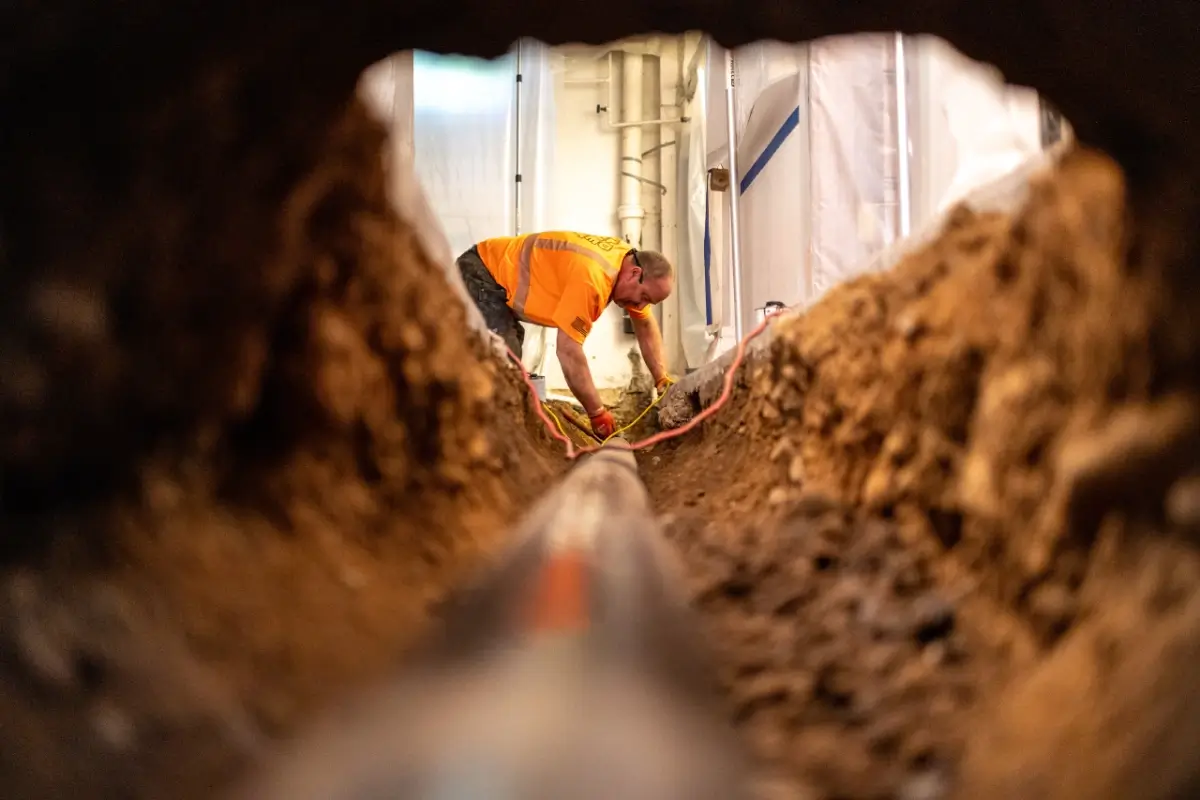
Your property gets its own lateral running directly to the public main, and your side of the old shared junction is capped. This is the only route that ends shared liability permanently, and it is the one jurisdictions ask for at sale. It is also the route that clears a transaction, because the connection is permitted, inspected and on record.

Where the route and the ground allow, the new lateral goes in through access pits at either end instead of a trench along its whole length. Lawns, mature planting, driveways and patios stay where they are, restoration cost drops, and the work finishes faster. We confirm it is viable from the camera survey and the locates, not from a guess.
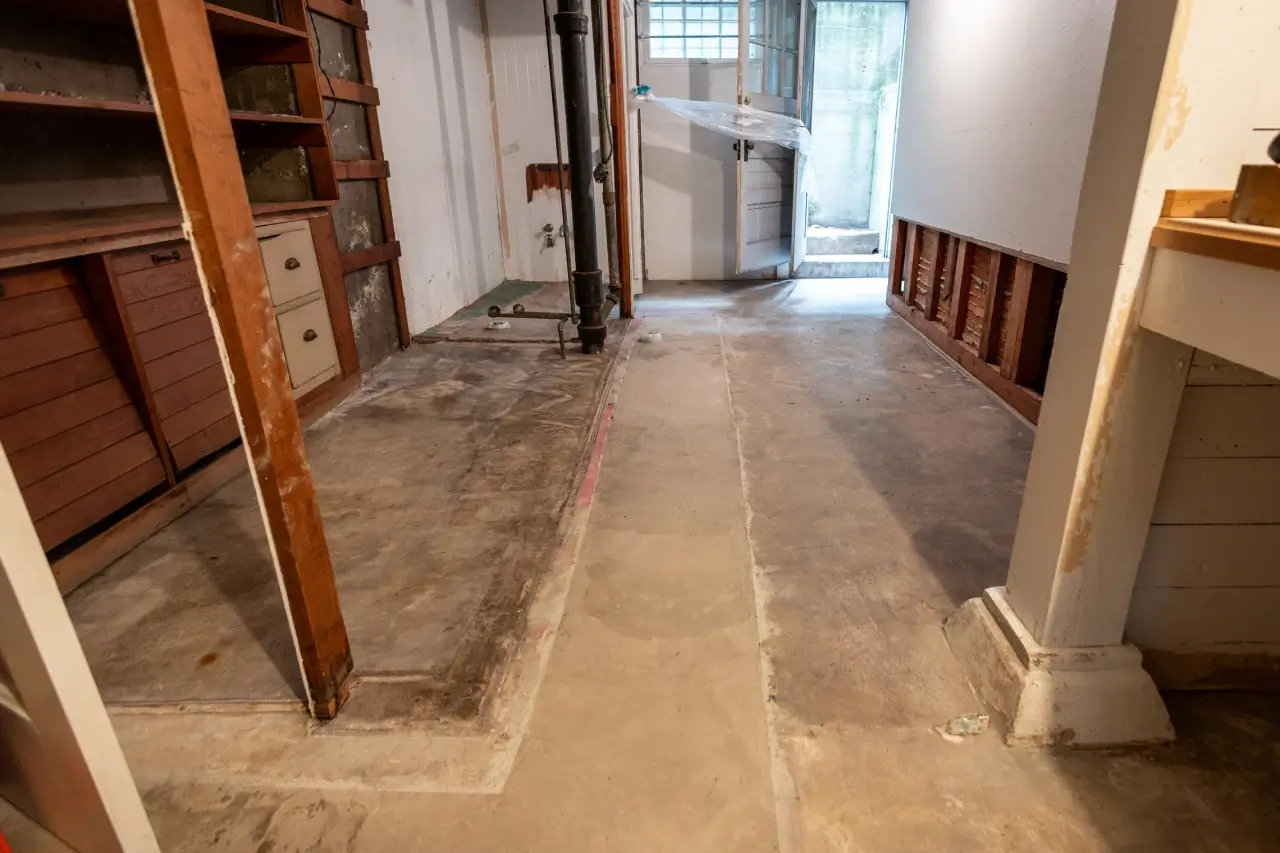
Where separation is not required yet and the failure is a defined defect rather than a line at the end of its life, the shared pipe can be repaired at the point of failure. This restores flow for every property on the line and is coordinated so nobody is out of service longer than necessary. It is a real option, and we will tell you plainly when it is buying time rather than solving the problem.

The two moments people find out they are on a party sewer are a backup and a sale. If it is a backup, the immediate job is getting the line flowing and the house usable again, then finding out why. If it is a sale, the clock matters more than anything, because a separation is permitted work with an inspection at the end and that sequence has a minimum length no matter how fast the digging goes. Call early rather than at the end of an inspection period.
Your yard is the other thing you are actually buying. Trenchless installation puts in an access pit at each end rather than opening the whole run, which is why we check it first. Where open-cut is the only option we keep the dig zone tight, protect what we can, compact the backfill properly so the ground does not settle in a year, and restore the surface. What comes out and what goes back is part of the written scope, not a surprise at the end.
The neighbor question comes up every time, so here it is plainly. Separating your property does not interrupt theirs. We cap only your side of the shared junction, and their line keeps running through the original pipe until they separate or are required to. Who pays for what depends on your deeds, your jurisdiction and where the failure actually sits, and that is a legal question rather than a plumbing one. What we can do is show you, on camera, exactly what is under the ground before anybody argues about it.

Shared laterals in a portfolio are a recurring liability rather than a one-off incident. An older fourplex, a converted house split into units, or two buildings on one legacy tap can all sit on a line whose failure mode is a sewage backup into an occupied unit. That is a habitability call, an insurance conversation and a maintenance record all at once, and it is worth knowing which of your addresses are exposed before one of them proves it.
We can survey on a planned basis rather than an emergency one. Camera every suspect lateral, record what is there, mark the tie-ins, and produce a condition report per address that tells you which lines are sound, which are due, and which should be separated now. That converts an unknown into a schedule and a planned line of spend. Work is then sequenced around occupancy, with notice periods that fit your tenant obligations and staged shutdowns rather than a whole-building outage.
On a multi-building or portfolio-scale separation the work is scoped through our excavation and civil site crews, with traffic control, surface restoration and public works documentation in the same contract. One vendor from camera to final inspection, and one set of records at the end of it.
“I live on the first floor of a condo, where the plumbing line is shared with the upper floors. I contacted Lovett for assistance when my kitchen sink overflowed, and Diego was outstanding in determining that I wasn’t responsible for the backup. He also explained the root cause to my HOA, ensuring they could address the issue without holding me accountable or burdening me with the cost.”
Homeowner, Verified Google Review
“We had an emergency last night at our community. I called Lovett and got an actual person on the phone right away. The plumber Sarah showed up in short order with a fantastic can do attitude, ready to get to work right away. The drain proved to be a significant challenge to clear but Sarah was bound and determined to clear it for our residents. She was there for hours and would not quit or give up!”
Property Manager
Dispatch reads every request and the right crew calls you back. For an active leak or backup, call instead.
Read by our dispatch team, normally answered within one business day. For an active leak or backup, call 971-204-8148 instead.
971-204-8148. A live dispatcher answers 24/7, including weekends and holidays.
info@lovettservices.com
6920 NE 42nd Ave
Portland, OR 97218
Mon to Fri 7am to 5pm
24/7 Emergency Dispatch
A party sewer is a single private lateral that carries wastewater from two or more separate properties to the public main. Builders installed them in the early to mid-1900s because one trench and one connection cost less than two. They are still in the ground across much of the older Portland metro housing stock. New connections are not built this way, and most jurisdictions now treat a shared lateral as something to be separated rather than maintained indefinitely.
A camera inspection is the only way to confirm it directly. The camera shows the point where a second line joins yours before reaching the main, and its locator marks that tie-in on the surface. Other indicators worth taking seriously are a title report or disclosure that mentions a shared sewer easement, an older property where the neighboring building sits between you and the street, and backups that seem to track a neighbor’s usage rather than your own.
Often, yes. Jurisdictions across the metro commonly require separation when a property on a shared lateral is sold, and frequently when a significant repair or a permitted addition brings the line into scope. Requirements differ by jurisdiction, so the honest answer for your address comes from checking it rather than assuming. Even where it is not required yet, separation is the only route that ends shared liability, which is why most owners who look at it end up doing it.
Yes. Separating a shared lateral and connecting a new independent line to the public main is permitted work with a required inspection at the end. Lovett pulls the permit, books the public utility locates, schedules the inspection, and makes sure the completed connection is recorded with the jurisdiction. You do not manage that process.
The digging is the short part. Installation and connection commonly run a few days, and trenchless work is often faster than that. The end-to-end timeline is longer because it includes utility locates, permit approval and the final inspection, all of which sit with third parties. Plan in weeks rather than days, especially if the separation is tied to a closing date, and start the camera survey as early as you can.
Not necessarily. Where the route and the soil allow, we install trenchless, using an access pit at each end rather than an open trench along the full run, which leaves lawn, planting, driveways and patios largely intact. We confirm that from the camera survey and the locates before committing to a method. Where open-cut is the right call, the dig zone is kept tight, backfill is compacted properly, and surface restoration is part of the written scope.
Nothing. Their service continues uninterrupted. When your new lateral goes in we cap only your side of the shared junction, and the original pipe keeps carrying their flow until they separate or are required to. The work is sequenced so their line is never out of service, and we coordinate access with them in advance.
That depends on your deeds, any recorded easement, your jurisdiction’s rules, and where the failure physically sits. It is a legal and ownership question rather than a plumbing one, and we do not pretend otherwise. What we can give you is the evidence to answer it: camera footage showing the defect, its measured distance from the access point, and a surface locate marking whose ground it is under. That is usually what ends the disagreement.
Yes, and sometimes that is the right first move, particularly during an active backup. Cabling opens the line and cuts roots; hydro jetting scours the full pipe diameter and removes what cabling leaves behind. On an old shared lateral with root intrusion at multiple joints, clearing buys months rather than years, which is why we camera the line afterwards and show you what condition it is actually in before you decide what to do next.
Yes. The mechanism is identical; the coordination is not. On an occupied building we survey and sequence around tenants, stage shutdowns rather than taking a whole building offline, and produce inspection records for your files. Portfolio-scale separations run through our excavation and civil site crews so traffic control, surface restoration and public works documentation sit in one contract.
(Answer 9 links “hydro jetting” to /drain-cleaning/. Answer 10 links “our excavation and civil site crews” to /excavation/.)
Party sewer work sits in the middle of three other services. Most projects touch at least two of them.
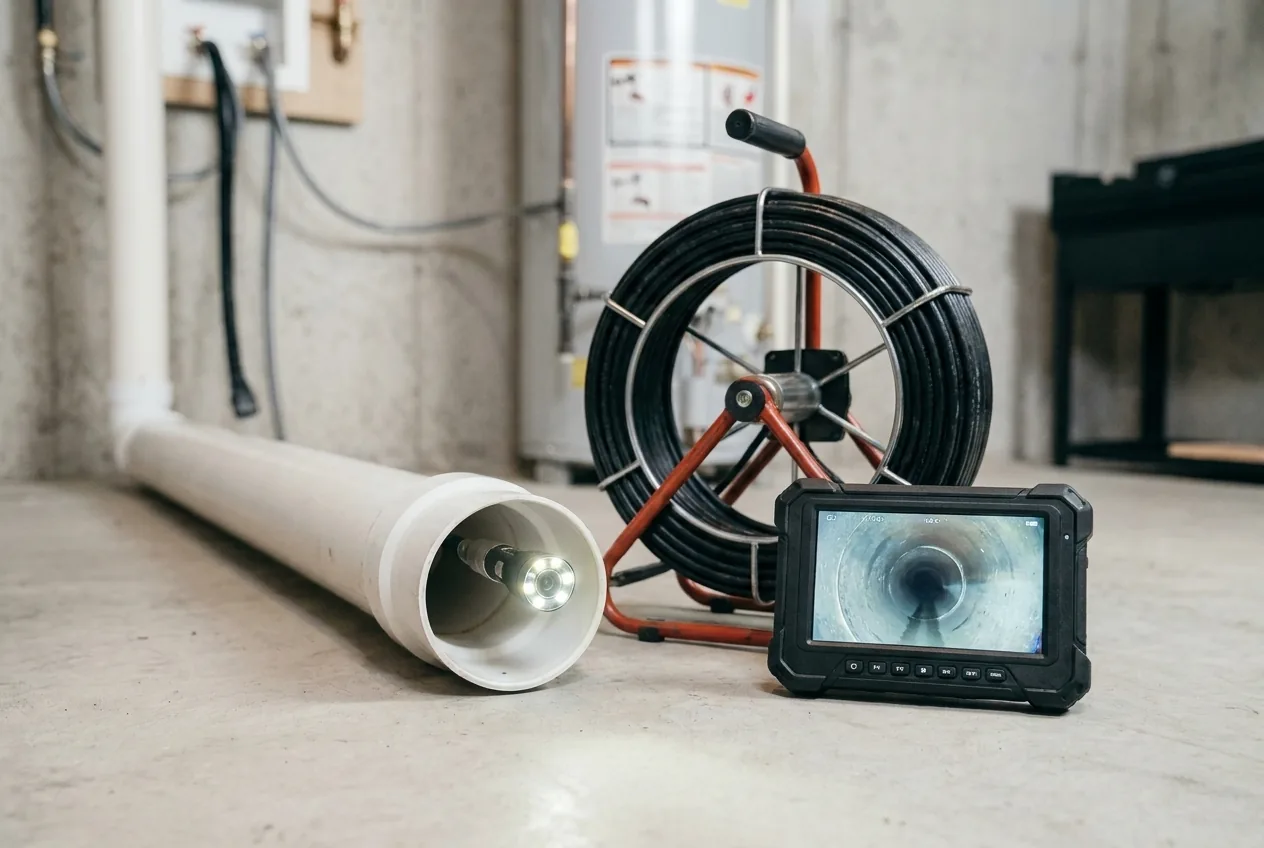
Every party sewer decision starts here. The camera confirms the tie-in, locates it on the surface, and shows what condition the shared pipe is actually in.
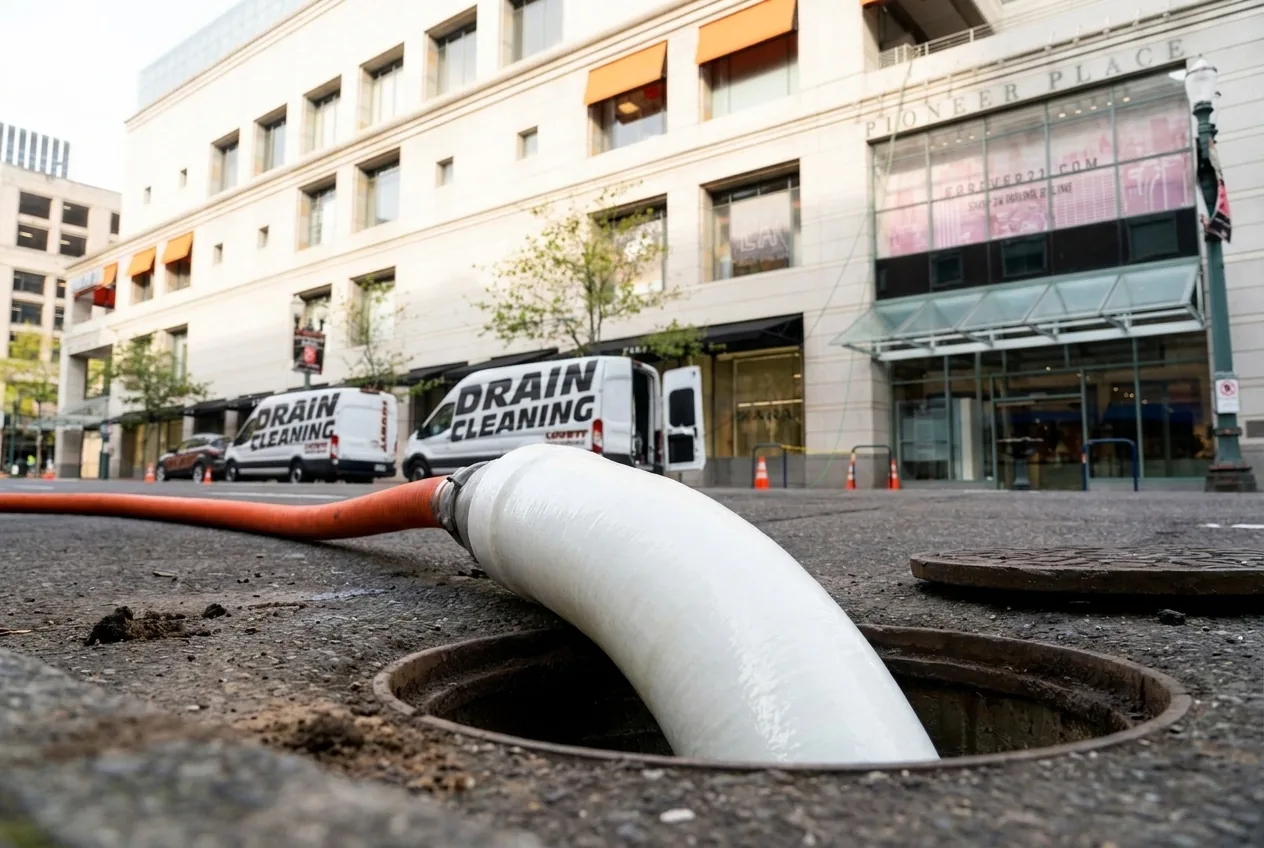
Installing a new independent lateral without trenching the whole run, using access pits at either end. The method that keeps a yard or a parking area intact.
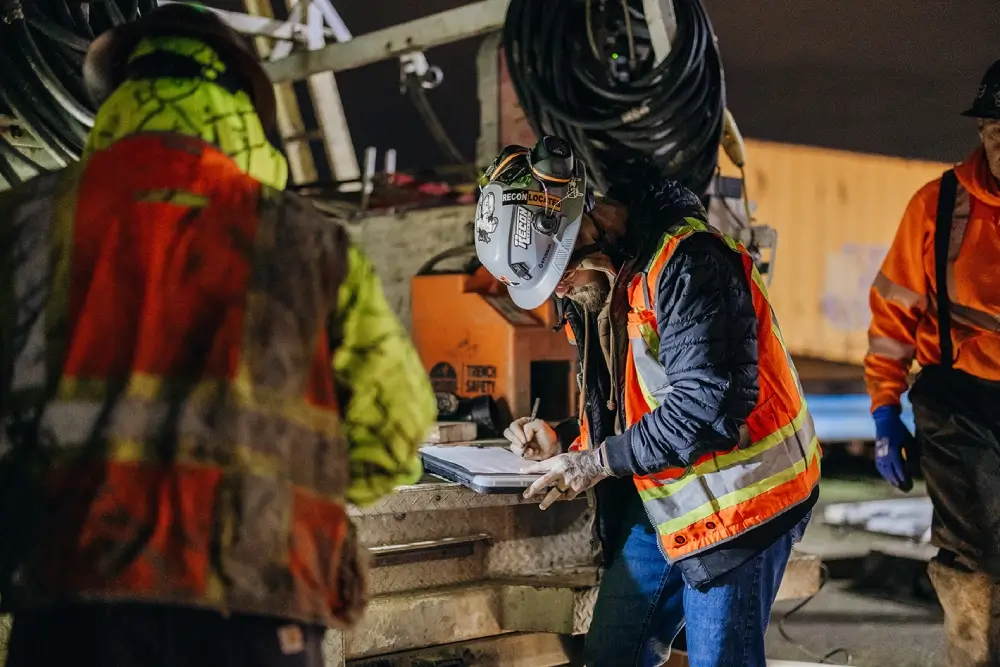
Portfolio and multi-building separations, right-of-way work, traffic control and surface restoration, scoped and documented in one contract.
A camera survey turns a shared-lateral rumor into a mapped, measured, recorded fact. From there the decision is straightforward. Serving Portland, the Willamette Valley and Southwest Washington since 1997.
4.9 Google rating from 500+ verified reviews · 1-year workmanship warranty · Free on-site estimates
