Always dispatching
Founded in Portland
Before work starts
On our workmanship
Licensed crews
REPIPPING HOMES
SINCE 1997
Repiping from Lovett is the full replacement of a home’s water supply lines in PEX or copper, planned from the routing first and priced on a written scope before the first wall opens.
Galvanized steel, polybutylene and pinholing copper all fail in their own way, and all of them fail behind finished walls. Lovett replaces the supply system in PEX or copper, plans the routing first, and puts the whole job on a written scope.
A repipe is the replacement of the pressurized water lines that feed every fixture in the house. It is not drain work and it is not a patch on one bad section. The reason it comes up at all is that the materials used in a lot of Portland housing stock have a known end of life: galvanized steel corrodes from the inside out, polybutylene splits at its fittings, and older copper starts producing pinhole leaks it will keep producing.
The symptoms arrive slowly and then all at once. Pressure drops at the top floor. The water runs rusty after the house has been empty for a weekend. A stain appears on a ceiling and the leak turns out to be two joist bays away from the stain. Any one of those on its own is a repair. Together, on a system built from a material with a known failure mode, they are the case for replacing the supply lines on your schedule instead of on the pipe’s.
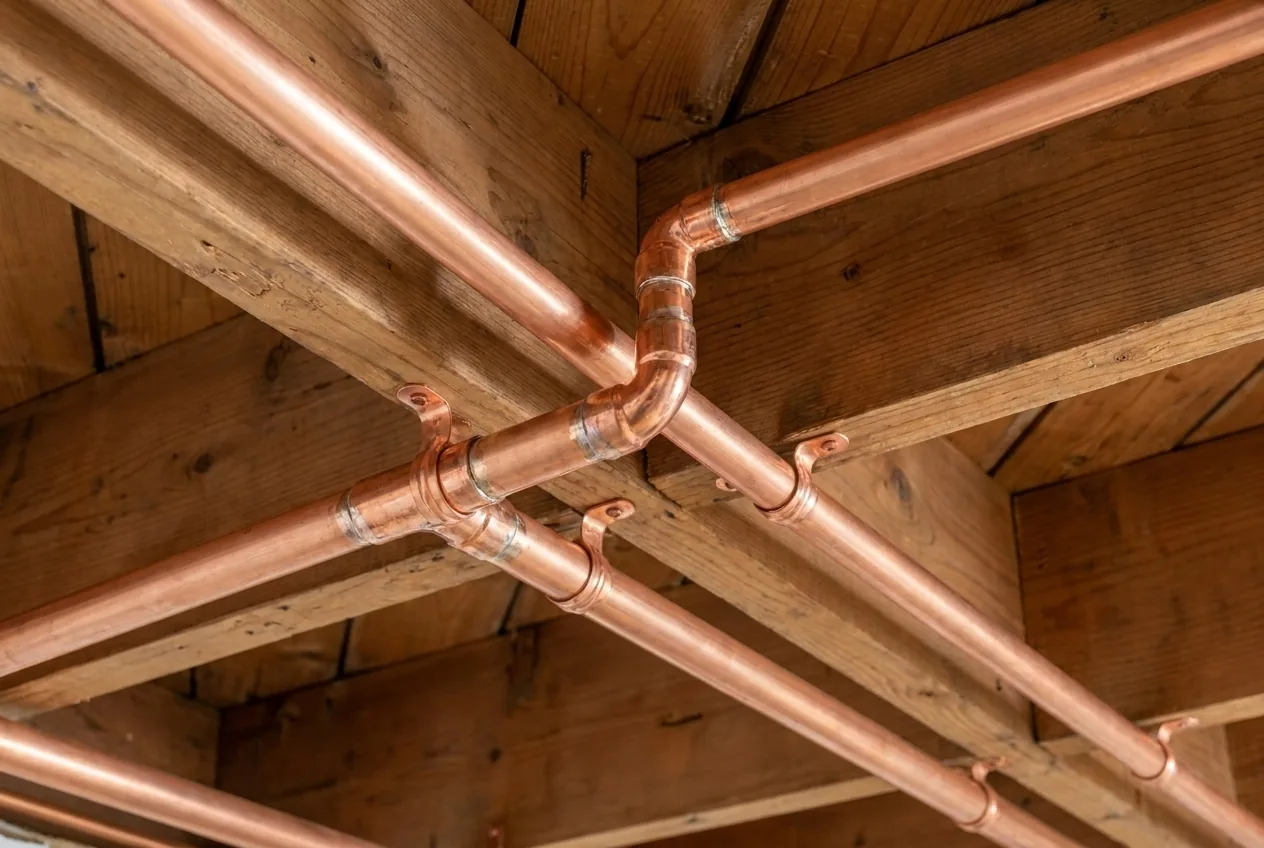
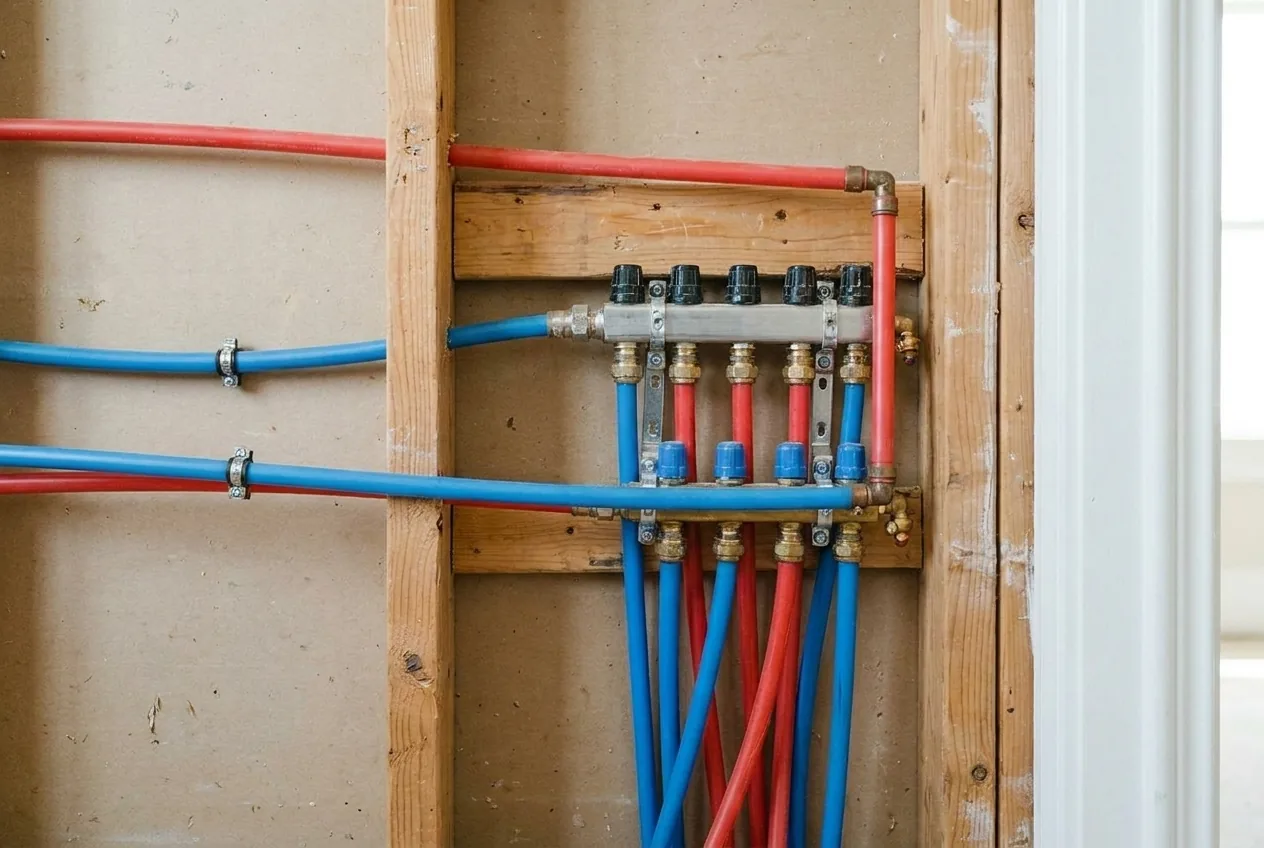
Lovett repipes in PEX or in copper. Cross-linked PEX bends around framing, so a run needs far fewer fittings, and fittings are where systems leak. It also tolerates freezing better than rigid pipe, which matters in an unheated crawlspace during a Portland cold snap. Type L copper is the traditional answer: rigid, naturally biostatic, fire resistant and long proven. Both are installed the same way at Lovett, which is with the routing planned before anything is opened up.
The planning is most of the difference between a clean repipe and a destructive one. We locate the existing mains, branch lines and fixture drops, decide where the new lines will run, and identify exactly which openings are needed to get there. The scope of what gets opened, and how it is left, is written into the estimate before the first cut. A whole-home repipe is typically completed in a few days, depending on the size of the house and how accessible the runs are.
The age of the house narrows it down. The material in the crawlspace settles it.
Common in homes built before 1970. Galvanized supply pipe corrodes from the inside, and the rust layer keeps building until it chokes the bore. That is where the weak upstairs shower and the slow-filling washer come from, and it is also why the water runs rusty or discolored. The outside of the pipe can look sound while the inside has closed down to a fraction of its original diameter.
Gray or blue flexible plastic pipe installed from roughly the late 1970s through the mid 1990s. Poly-B fails at the fittings rather than along the run, which makes it hard to inspect your way to confidence, and it is often difficult to insure. If your house has it, the right move is an inspection to assess condition and plan replacement before a fitting lets go behind a wall.
Copper joints soldered before 1986 may contain lead solder, which is a water quality concern rather than a flow or leak concern. It does not announce itself through pressure or noise, so it is found by dating the plumbing rather than by waiting for a symptom. Where it is present, replacing the supply system removes the source rather than filtering around it.
CPVC grows brittle with age and can fracture when disturbed, which makes any future work on it riskier than it should be. Copper in older systems, or copper carrying aggressive water, develops pinhole leaks that recur somewhere new after each repair. A second or third pinhole on the same system is the point where repairing individual holes stops making sense.
A technician traces the existing supply from the meter or well line through the mains, branch lines and fixture drops, checks static pressure, and inspects the crawlspace or basement runs. You get a written scope that names the material going in, the route the new lines will take, which openings are needed and how they will be left. That document is what the job is run against.
Floor protection goes down along every working route. Dust barriers isolate the areas being opened. Work zones are cleaned at the end of each day rather than at the end of the job, because you are still living in the house while it happens. Furniture and stored items in the way get moved and moved back rather than worked around.
New lines go in on planned routes and are strapped and supported properly, which is what keeps water hammer out of a new system. PEX runs take the bends that would otherwise need fittings. Copper runs are cut and joined to length. Fixture drops are set, shutoffs are fitted, and the old system is removed or safely abandoned in place depending on what is reachable.
The finished system is pressure tested above normal municipal supply pressure and held, so any weeping joint shows up before the walls close rather than after. Service is restored, every fixture is run and checked, and the openings are left as specified in the scope. The 1-year workmanship warranty takes effect on completion and is on record with the job.
Tell us the year the house was built and what the water is doing, and we will get a technician out to identify the material and the condition it is in. You get the finding in writing either way.
4.9 Google rating from 500+ verified reviews · 1-year workmanship warranty · Free on-site estimates
Three changes you can measure, and one you cannot see until the house is sold.
Corroded galvanized pipe loses bore diameter for decades before anyone calls it a problem. New lines at the correct size restore the flow the fixtures were designed around, which is why the difference shows up first as two showers running at once without either one dropping. Pressure at the top floor of a two story house is usually where it is most obvious.
Rust flakes and sediment in the hot or cold line come from the inside of the pipe carrying it. Replace the pipe and the source goes with it. This is the change people notice in the laundry and at the kitchen tap within the first week, and it is the reason discolored water is treated as a material question rather than a filtration question.
Hidden leaks do their damage long before anything reaches a floor. Framing rots, drywall takes on water and mold gets a start behind a finished surface. Replacing the supply system removes the failing material rather than patching around it, and a documented repipe is one of the first things a buyer's inspector looks for in an older house.
4.9 Google rating from 500+ verified reviews.
“Brandon was a lifesaver. In just two hours, he figured out what our rental maintenance team and another contractor couldn’t—the leak was coming from upstairs. He didn’t stop there either. He cleaned up the mess left behind, helped reduce the active leaking, and made sure everything was handled as well as possible on our end. He was professional, thorough, and kept us updated the whole time, which we really…”
Verified Google Review
“Cameron was so knowleageable and very friendly. He checked out the basement toilet to see if leaks had happened from first floor toilet. He talked about exactly he would do to fix the toilet leak, and then did it! He left the bathroom in spotless condition after all of the work that he did.”
Homeowner, Portland, OR
“Tech Justin was very good to work with. Friendly , knowledgeable , good communication through out project. Left job site tidy.Will use Lovett for future projects”
Verified Google Review
“Lovett was dispatched to fix a leaky bathtub faucet in our rental home, and the service I received was top notch! Jill reached out to me quickly and was able to schedule us for the next day.”
Homeowner, Portland, OR
“I’ve now had two very positive experiences with Lovett, one with Cody and one with Cameron, both of whom were very helpful and efficient. Most of all I appreciated their communication and how they helped me understand the plumbing issues.”
Verified Google Review
“We had an emergency last night at our community. I called Lovett and got an actual person on the phone right away. The plumber Sarah showed up in short order with a fantastic can do attitude, ready to get to work right away.”
Verified Google Review
“Dan from Gladstone was prompt, courteous, and thorough in diagnosing our plumbing issues and finding a good solution. He was experienced and knowledgeable and offered good advice for maintaining our bath/shower plumbing going forward.”
Verified Google Review
“I had a kitchen sink issue. Lovett came out, and Greg was my tech. very smart and informative. He was efficient and clean. He answered questions. And my sink was cleared up in an hour. I was so thankful for the service and reasonable price.”
Homeowner, Portland, OR
“I hadn’t lived I’m my new place for ten days when a pipe broke. Dan came first thing the next morning, cut a 5×10 hole in the wall and capped off the pipe – problem solved! He also took the time to turn down the heat on my hot water heater, and explain the plumbing system to me.”
Homeowner, Portland, OR
“I had a major issue with my well system and was completely without water. After calling many companies who all said they couldn’t help, I reached Ken Williams at Lovett. Ken was immediately attentive, kind, and incredibly knowledgeable.”
Verified Google Review
Dispatch reads every request and the right crew calls you back. For an active leak or backup, call instead.
Read by our dispatch team, normally answered within one business day. For an active leak or backup, call 971-204-8148 instead.
971-204-8148. A live dispatcher answers 24/7, including weekends and holidays.
info@lovettservices.com
6920 NE 42nd Ave
Portland, OR 97218
Mon to Fri 7am to 5pm
24/7 Emergency Dispatch
A whole-home repipe is typically completed in a few days. The variables are the size of the house, the number of bathrooms and fixtures, and how accessible the existing runs are behind finish. A single story house on a crawlspace moves faster than a three story house on a slab with finished ceilings. We give you the expected window in the written scope before work starts.
The strongest indicators are pressure that has dropped across the whole house rather than at one fixture, water that runs rusty or discolored from multiple taps, and leaks that keep appearing in new places rather than the same place. Add the age and material of the system to those symptoms and the answer is usually clear. An inspection gives you the material and its condition in writing.
Yes, poly-B is a legitimate concern. It is the gray or blue flexible plastic pipe installed in many homes from the late 1970s through the mid 1990s. It fails at the fittings rather than along the pipe run, which means an intact-looking run tells you very little, and it is often difficult to insure. If your home has it, get it inspected and plan the replacement rather than waiting for a fitting to let go.
Both are sound, and the right answer depends on the house. PEX is flexible, tolerates freezing better than rigid pipe, and needs far fewer fittings, which removes potential leak points. Type L copper is rigid, naturally biostatic, fire resistant and has decades of proven service behind it. We install both, and we walk through the trade-offs at the estimate so the choice is yours rather than ours.
No. We coordinate the work so the house stays livable. Work zones are isolated to control dust, protection goes down on the routes we are using, and we sequence the runs so water service is back on by the end of each working day wherever the layout allows. You will hear us and you will see openings in walls, but you will not be without water overnight.
Openings are cut only where access is genuinely needed, and they are kept as small as the work allows. Where the new route can follow a crawlspace, an attic or an existing chase, we take that route rather than opening finished surfaces. The exact openings, and how they are left when we finish, are written into the scope before the first cut so there is no surprise at the end.
Galvanized steel supply pipe, common in pre-1970 homes, corrodes from the inside and restricts flow. Polybutylene is prone to fitting failure. Copper joints soldered before 1986 may contain lead solder, which is a water quality concern. CPVC grows brittle with age. Copper that has produced recurring pinhole leaks is also a clear signal. Any of these in poor condition justifies a repipe evaluation.
Square footage, the number of fixtures across bathrooms, kitchen, laundry and outdoor hose bibs, the material chosen, and above all how accessible the existing runs are. A house with a full crawlspace and an unfinished basement is a different job from a slab-on-grade house with finished ceilings throughout. You get an itemized written estimate before work begins, with no surprise charges added later.
Yes. Lovett backs a repipe with a 1-year workmanship warranty covering our labor and installation. The manufacturer’s own warranty on the pipe and fittings applies on top of that. The terms of what is and is not covered are set out on our warranty page, and we would rather you read them before the job than after it.
Yes, and at that scale the method usually changes. Buildings are staged floor by floor or riser by riser to keep tenants in water, and underground supply and sewer replacement is often better handled by pipe bursting or open cut excavation than by opening occupied interiors. Those are the same crews and the same dispatch. See /pipe-bursting/ and /excavation/ for how that work runs.
Pipe replacement across a building or a site is a different job with different equipment. Occupied units cannot go without water, and a trench across a drive aisle is rarely acceptable. The same dispatch sends a different crew and a different method.
Replace a failed underground line along its existing path without opening the whole run. Used where a full trench across parking, landscaping or a drive aisle is not workable.
Open cut replacement of water and sewer mains, utility trenching, shoring, backfill and surface restoration, with the site put back the way it was found.

A supply line that lets go before the repipe is scheduled gets a crew at any hour.
A repipe is the natural moment to replace an aging tank or move to tankless.
New supply lines pair with new shutoffs, faucets and fixture trim.
Lovett has been repiping houses across Portland and SW Washington since 1997. Routing planned first, scope in writing, pressure tested on completion, backed by a 1-year workmanship warranty.
4.9 Google rating from 500+ verified reviews · 1-year workmanship warranty · Free on-site estimates
