Always dispatching
Founded in Portland
Before work starts
On our workmanship
Licensed crews
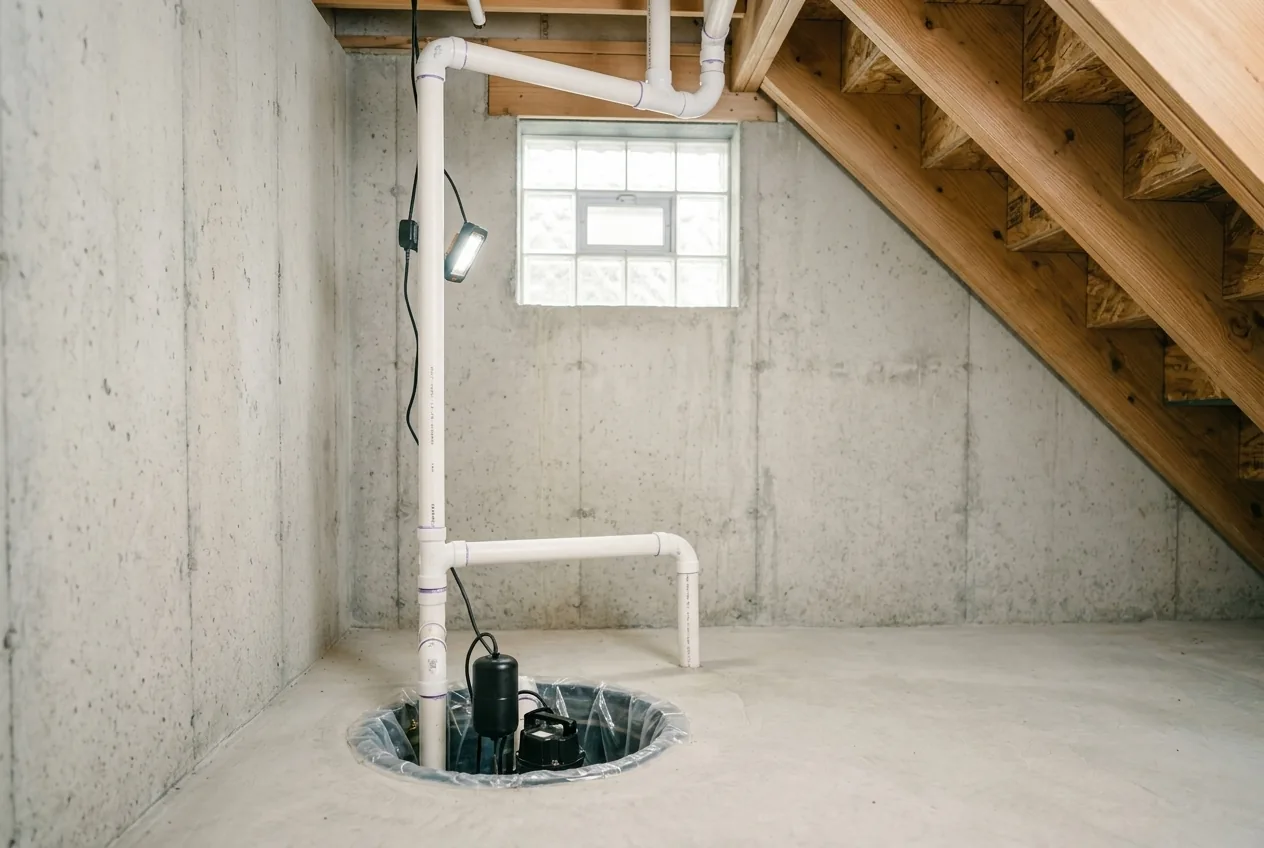
Keeping lower levels dry
Lovett installs, repairs and adds battery backup to sump pump systems in Portland basements and crawlspaces, sized to the water the pit actually sees in a wet winter.
The pump you never think about is the one holding water out of the lowest floor of the house. Lovett installs, repairs and backs up sump systems, and tests them before the wet season rather than during it.
A sump pump sits in a pit at the lowest point of a basement or crawlspace. Groundwater and rainwater collect in that pit by design, a float switch trips when the level rises, and the motor pushes the water out through a discharge line and away from the foundation. When it is working, the result is a dry lower level through weeks of rain. When it is not, the first evidence is usually standing water on a floor.
Parts of our service area make that pump a genuine requirement rather than an optional extra. The research on our own coverage towns records seasonally high water tables along the Tualatin River floodplain, in the Fanno Creek corridor around Tigard, in low areas near Lake Oswego and along the creek corridors in Hillsboro, with sump pumps close to standard in older Tualatin housing stock. A pump in those settings is not backup equipment. It is the primary water control for the lowest floor.
Failures cluster around four things: a float switch that has snagged against the side of the pit or against the discharge pipe, a check valve that has stopped holding so discharged water runs straight back in, an intake screen packed with silt, and a motor that has simply reached the end of its life after years of cycling. Three of the four are quiet failures. The pump looks fine sitting in the pit, and nothing indicates a problem until it is asked to work.
That is why the useful time to look at a sump system is September and October, not January. A pump tested in dry weather can be repaired or replaced on a schedule you choose. A pump discovered during a storm is an emergency call, usually with water already on the floor and a power outage in the mix. Lovett dispatches 24/7 for the second case, and we would rather you never need it.
Install it right, keep it tested, back it up, and replace it before it fails rather than after.
We size the pump to the volume of water actually entering the pit rather than to the pit dimensions alone, which is the mistake that produces a pump cycling every ninety seconds. That means checking the water table, the pit, the inflow and the discharge run. The check valve, the pit lid and the route the discharge takes away from the foundation are all part of the install, not extras.
Jammed and snagged float switches, failed check valves, silted intake screens, seized or burned out motors, and discharge lines blocked or frozen at the outlet. We diagnose which one it is rather than defaulting to a replacement, because a pump with a failed check valve is a pump that is working perfectly and being asked to move the same water twice.
Storms bring power cuts, and a power cut is exactly when the primary pump is needed most. A backup unit sits alongside the primary and takes over automatically when the grid drops or the primary fails. We use high capacity deep cycle batteries built for long run times, so the secondary pump keeps moving water through an extended outage rather than for twenty minutes.
A short annual visit before the rain starts. We flood the pit to confirm the float triggers and the pump clears it, check that the check valve holds, clear the intake screen, confirm the discharge outlet is open, and test the backup battery under load. It is the shortest visit on this page and it prevents most of the rest of it.
The technician inspects the pit, the existing pump, the discharge run and its outlet, and asks where and when water has appeared in the past. Water intrusion has a history, and that history tells you more about what the system needs than the nameplate on the old pump does. Grading, downspout discharge and foundation drainage get looked at in the same visit.
You get a written recommendation with the reasoning attached: pump capacity, the case for a backup unit on this house, and what the discharge route needs to be. Where a repair will genuinely restore the system, that is the recommendation. Where the pump is at the end of its life going into a wet season, we say that plainly rather than repairing it twice.
The pump is seated correctly at the base of the pit rather than sitting in accumulated silt. The check valve goes in the right orientation and at the right height. The discharge line is routed and terminated far enough from the foundation that the water does not simply find its way back to the pit. A sealed pit lid goes on where the pit allows it, which cuts both humidity and noise.
We physically flood the pit and watch the float trigger, the pump clear the water and the check valve hold when it shuts off. Where a backup is fitted, we simulate a power failure and confirm the secondary unit picks up. Then you get the walkthrough: how to test it yourself, what it should sound like, and when to call. The 1-year workmanship warranty takes effect on completion.

A pre-season test takes one short visit and settles the question of how the system will hold up. If the pit is already filling and the pump is not clearing it, call. Emergency dispatch runs 24/7.
4.9 Google rating from 500+ verified reviews · 1-year workmanship warranty · Free on-site estimates
Every one of these is easier to deal with in dry weather than during a storm.
A pump cycling constantly is either fighting a check valve that has stopped holding, working against a float switch pinned against the side of the pit, or undersized for the volume of water coming in. All three shorten the life of the motor considerably. A pump that never seems to rest is telling you something specific rather than just working hard.
The motor is powered and the impeller is not turning. That is a seized impeller, a jammed float or a failed motor, and it means the pit is going to fill the next time it rains regardless of what the pump sounds like. A pump that has not cycled at all in months despite recent rain is worth the same suspicion.
Damp on a basement wall, a wet patch on a crawlspace vapor barrier, or efflorescence appearing on concrete. These can mean the pump is falling behind, that the discharge is putting water back where it came from, or that the water is getting in somewhere the pit does not serve. All three are worth a visit before the ground is saturated.
4.9 Google rating from 500+ verified reviews.
“We had an emergency last night at our community. I called Lovett and got an actual person on the phone right away. The plumber Sarah showed up in short order with a fantastic can do attitude, ready to get to work right away. The drain proved to be a significant challenge to clear but Sarah was bound and determined to clear it for our residents. She was there for hours and would not quit or give up!”
Verified Google Review
“I called these guys with an emergency plumbing situation, and Sam (the rep) was amazing and responsive! They were very kind and flexible. So great!”
Verified Google Review
“Tech Justin was very good to work with. Friendly , knowledgeable , good communication through out project. Left job site tidy.Will use Lovett for future projects”
Verified Google Review
“Lovett was dispatched to fix a leaky bathtub faucet in our rental home, and the service I received was top notch! Jill reached out to me quickly and was able to schedule us for the next day.”
Homeowner, Portland, OR
“I’ve now had two very positive experiences with Lovett, one with Cody and one with Cameron, both of whom were very helpful and efficient. Most of all I appreciated their communication and how they helped me understand the plumbing issues.”
Verified Google Review
“Dan from Gladstone was prompt, courteous, and thorough in diagnosing our plumbing issues and finding a good solution. He was experienced and knowledgeable and offered good advice for maintaining our bath/shower plumbing going forward.”
Verified Google Review
“Brandon was a lifesaver. In just two hours, he figured out what our rental maintenance team and another contractor couldn’t—the leak was coming from upstairs. He didn’t stop there either.”
Verified Google Review
“I had a kitchen sink issue. Lovett came out, and Greg was my tech. very smart and informative. He was efficient and clean. He answered questions. And my sink was cleared up in an hour. I was so thankful for the service and reasonable price.”
Homeowner, Portland, OR
“I hadn’t lived I’m my new place for ten days when a pipe broke. Dan came first thing the next morning, cut a 5×10 hole in the wall and capped off the pipe – problem solved! He also took the time to turn down the heat on my hot water heater, and explain the plumbing system to me.”
Homeowner, Portland, OR
“I had a major issue with my well system and was completely without water. After calling many companies who all said they couldn’t help, I reached Ken Williams at Lovett. Ken was immediately attentive, kind, and incredibly knowledgeable.”
Verified Google Review
Dispatch reads every request and the right crew calls you back. For an active leak or backup, call instead.
Read by our dispatch team, normally answered within one business day. For an active leak or backup, call 971-204-8148 instead.
971-204-8148. A live dispatcher answers 24/7, including weekends and holidays.
info@lovettservices.com
6920 NE 42nd Ave
Portland, OR 97218
Mon to Fri 7am to 5pm
24/7 Emergency Dispatch
It sits in a pit at the lowest point of a basement or crawlspace and removes water that collects there. As groundwater or rainwater fills the pit, a float switch triggers the motor, which pushes the water out through a discharge line and away from the foundation. The result is a dry lower level through sustained rain or snowmelt, when the water table around the house rises.
Many do, particularly houses with basements, finished crawlspaces or lots in low lying ground. Several of the communities we cover sit on seasonally high water tables, including the Tualatin River floodplain, the Fanno Creek corridor in Tigard, low areas near Lake Oswego and the creek corridors around Hillsboro. In older Tualatin housing stock, sump pumps are close to standard. Any house with a history of moisture intrusion is a candidate.
Pour a bucket of water slowly into the pit and confirm the float switch triggers and the pump clears it within a few seconds. Do that at least once a year, before the rainy season starts rather than during it. Also check that the discharge outlet is clear of debris and that the check valve above the pump is intact. Inspect a backup battery annually and plan on replacing it every three to five years.
The pump runs but water still accumulates. The motor hums and the impeller does not turn. The float does not trigger when you pour water into the pit. Visible rust or corrosion on the housing. Or the pump has not cycled in months despite recent rain. Any of those found in September is a scheduled repair. Found in January, it is an emergency with water on the floor.
Three common causes. A float switch stuck against the wall of the pit or against the discharge pipe, so the pump never gets the signal to stop. A failed check valve, which lets the water it just discharged run straight back down into the pit. Or a pump that is undersized for the volume of water entering the house. All three shorten motor life, and all three are diagnosable in one visit.
Yes, and we recommend them for any house where the lower level holds anything that matters. Heavy storms and power cuts arrive together, and a primary pump without electricity does nothing. The backup unit sits alongside the primary and takes over automatically if power drops or the primary fails. We use high capacity deep cycle batteries built for extended run times.
A primary residential pump generally lasts seven to ten years. That shortens considerably if the pump runs near continuously because of a high water table, or if it cycles constantly because the basin is undersized for the inflow. Regular testing and a look at the pump each autumn is what tells you where yours is in that range, rather than guessing from the install date.
No. Harsh chemicals, bleach and chemical drain cleaners degrade the rubber seals, plastic components and float switch on the pump, which leads to premature failure of the thing you were trying to look after. They also end up in the groundwater wherever the pump discharges. If the pit smells or has silted up, the answer is cleaning it out, not treating it.
Yes. Sump systems protecting lower level parking, basements and elevator pits are part of what our commercial plumbing crews handle, alongside the rest of the building’s plumbing infrastructure. It is the same company and the same dispatch, with equipment sized for the scale. See /commercial-plumbing/ for how that work is scoped and scheduled around a building in use.
Yes. Lovett backs sump pump installation and repair with a 1-year workmanship warranty covering our labor and installation. The manufacturer’s own warranty on the pump and on a backup battery applies on top of that. What is and is not covered is set out on our warranty page, and it is worth reading before the job rather than after.
Lovett has been installing, testing and replacing sump systems across Portland and SW Washington since 1997. Sized to the water coming in, proven by flooding the pit, backed by a 1-year workmanship warranty.
4.9 Google rating from 500+ verified reviews · 1-year workmanship warranty · Free on-site estimates
