Trusted public works partner for cities, utilities, and municipal agencies across Oregon and Washington. Reliable, compliant, and fully documented infrastructure solutions.
Always available, day or night
Portland's trusted contractor
Oregon Licensed & Insured
Skilled, certified field team
1-year workmanship warranty
Industrial facilities operate at a scale and intensity that demands infrastructure partners with specialized heavy-duty capabilities. A plumbing failure in a manufacturing plant can halt production lines, trigger environmental compliance violations, and cost tens of thousands of dollars per hour in downtime. Lovett Services has served Portland’s industrial sector since 1997, developing the specialized expertise to handle the complex underground networks, high-capacity systems, and strict regulatory requirements of industrial operations. Our team understands that in an industrial environment, the stakes are always higher, and we respond accordingly.
Purpose-built capabilities for cities, utility districts, and public works agencies across Oregon and Washington.
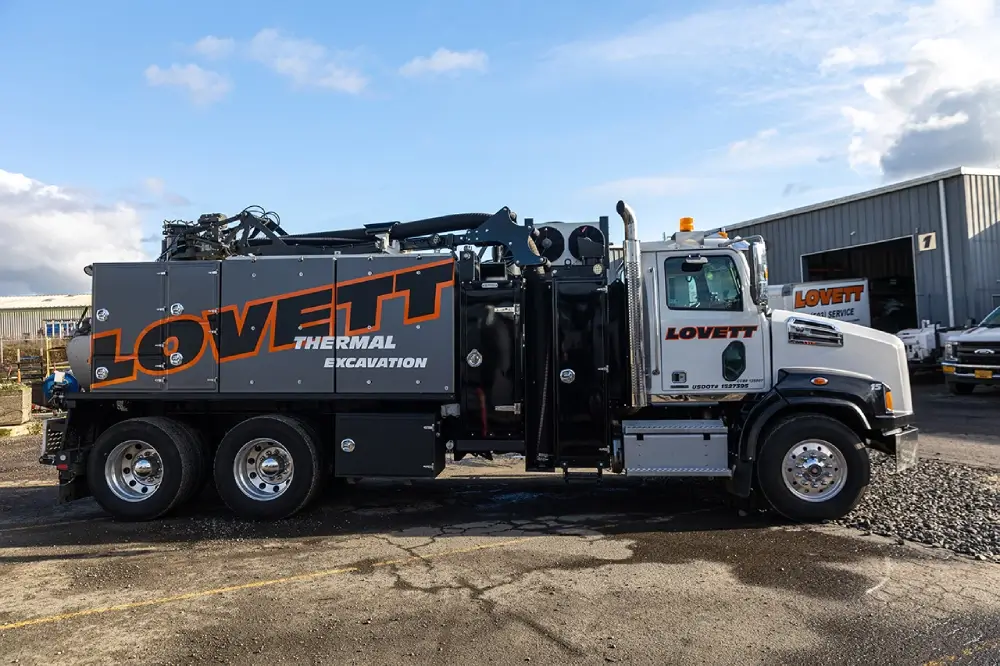
Heavy-duty vacuum extraction for municipal vault cleaning, emergency pump station response, and confined space preparation.
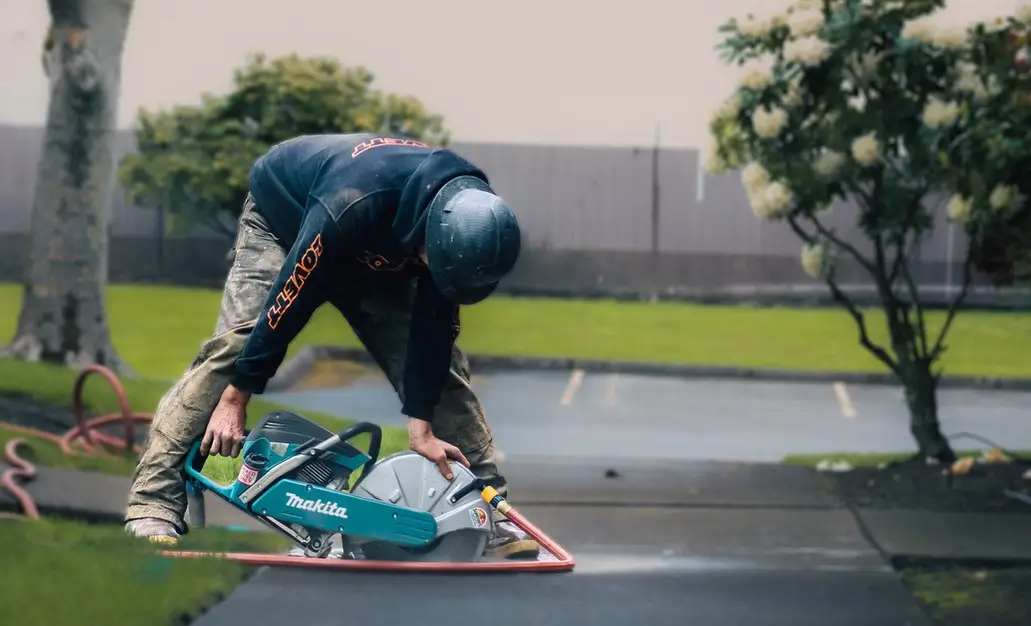
Sanitary sewer rehabilitation, fire line installation, and civil site work with full municipal permitting and public works compliance.

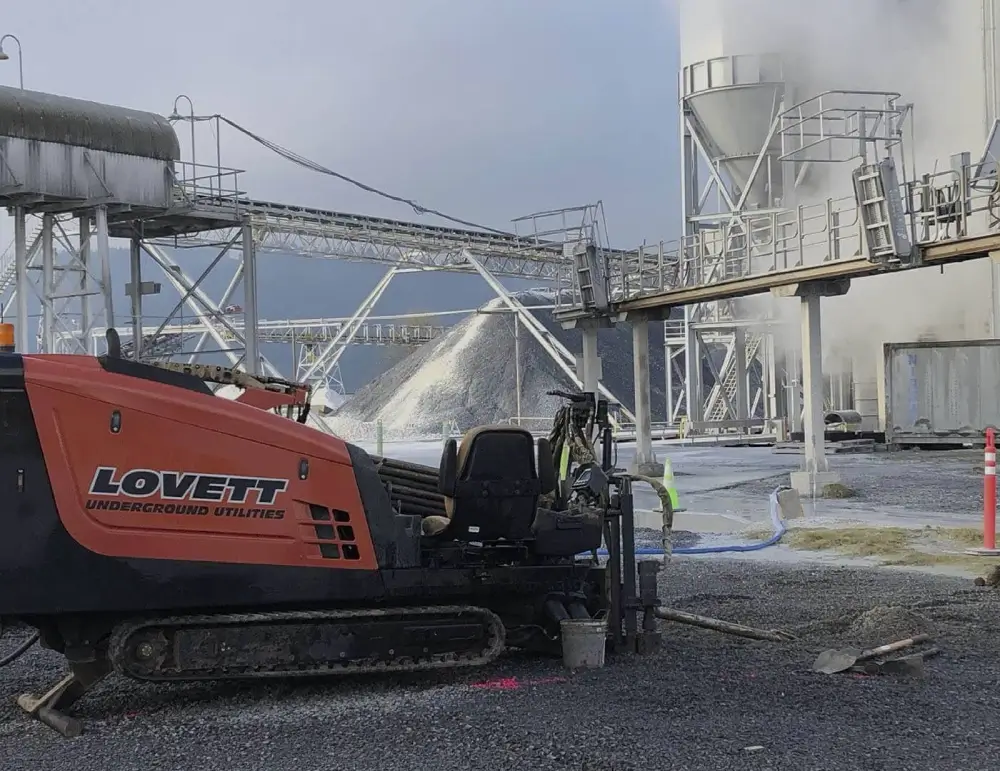
Trenchless utility installation for municipal right-of-way projects: no traffic closures, no torn-up pavement, full public works documentation.
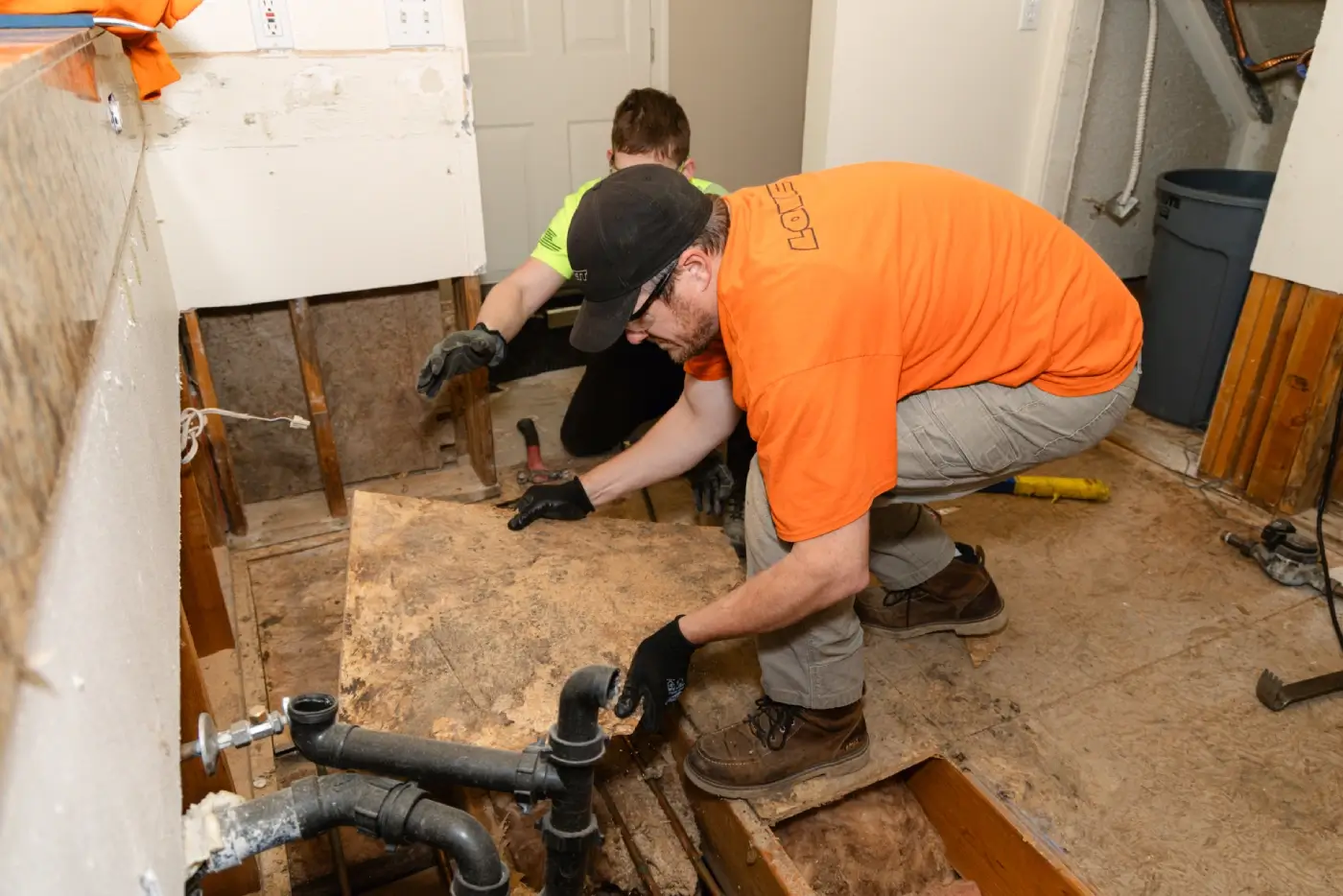
Catch basin cleaning, storm filter replacement, and pump station maintenance keeping municipal drainage systems compliant and functional.

“Cody assessed everything at midnight on Thanksgiving Eve. Ken sent two men out who worked through Thanksgiving until 5pm so 20 residents could have water for the holiday. These guys are heroes.”
Multi-Family Property, Portland, OR
Years in Business
OR & WA Service Area
Full Public Works Docs
Oregon’s public infrastructure is aging faster than agencies can fund replacements. Navigating these challenges requires contractors with deep technical knowledge and regulatory fluency.

ASCE gives Oregon's wastewater infrastructure a D+. Many Portland-area mains predate World War II, and the national replacement rate has fallen to just 2% annually. Full open-cut replacement runs $150 to $300+ per linear foot with pavement restoration. CIPP lining is increasingly preferred at $60 to $130 per linear foot, same structural renewal, no road reconstruction, project timelines cut from weeks to days.

Portland excavation requires a PBOT Street Opening Permit; work on Powell, Barbur, or Sandy Blvd requires a concurrent ODOT Utility Encroachment Permit. All active travel corridor projects require a certified Traffic Control Plan, with PBOT-mandated lane closure windows and advance public notification. Lovett's crews manage multi-agency permit stacks and hold all required traffic control certifications.
Portland's $1.4B Big Pipe Project reduced CSO events to the Willamette by 94%, driven by an Oregon DEQ consent order under Clean Water Act Section 402 NPDES. Contractors supporting municipal CSO compliance must understand sewer separation projects, BES green infrastructure programs, and NPDES permit obligations. Lovett has supported municipal infrastructure work across the Portland metro throughout this era of compliance investment.
Every public works project Lovett performs follows a structured delivery process built around Portland’s multi-agency permit environment and public accountability standards.
Before any ground breaks, Lovett submits Utility Notification Center (811) locates and conducts vacuum excavation potholing to verify existing utility positions against GIS as-built records from BES, Portland Water Bureau (PWB), and PBOT. We obtain Street Opening Permits and where applicable ODOT encroachment permits, and coordinate with BES and Portland Bureau of Development Services (BDS) for any required tap permits or sewer lateral certifications. Site-specific subsurface utility engineering (SUE) documentation is prepared and submitted for agency review as part of the public record.
Lovett prepares and posts mandatory advance public notification for all street-impacting work, consistent with PBOT's requirements for construction activity in the right-of-way. Our certified flaggers and traffic control supervisors implement PBOT-approved Traffic Control Plans before mobilization. For larger closures, we coordinate with TriMet to adjust bus stop placements and with the Portland Fire Bureau on temporary fire access routes, a requirement that is often overlooked by less experienced contractors working in Portland's dense street grid. ADA pedestrian access continuity is maintained throughout construction in compliance with PBOT standards.
Lovett evaluates every sewer and water main project through a trenchless-first lens. Where pipe condition and alignment allow, we recommend CIPP lining, pipe bursting, or horizontal directional drilling (HDD) before open-cut excavation. Trenchless methods reduce surface disruption, accelerate project timelines, lower total cost for municipalities by minimizing pavement cut-and-restore expenses, and significantly reduce public inconvenience. When open-cut excavation is required, Lovett employs trench box shoring systems and follows Oregon OSHA 1926 Subpart P excavation standards. Our crews are equipped and trained for both methods, giving public agencies a single contractor who can deliver the most appropriate solution for each segment of pipe.
Every sewer rehabilitation project receives a CCTV pipe inspection before final acceptance, with video documentation submitted to the agency in NASSCO PACP-coded format for inclusion in the municipal sewer asset management system. Water main replacements are hydrostatically pressure-tested and disinfected per AWWA C651 standards before being returned to service. Lovett prepares as-built drawings in AutoCAD and GIS-compatible formats for submission to PBOT, BES, and PWB as required, ensuring the public record reflects the actual installed condition of the system. Pavement restoration is performed to PBOT specifications, including temporary patching, trench resurfacing, and permanent overlay where required by permit.
Answers to the questions public works directors and municipal procurement teams ask most often when evaluating contractors for infrastructure projects.
A combined sewer system conveys both sanitary sewage (from toilets, sinks, and drains) and stormwater runoff in a single shared pipe. During heavy rain events, the combined volume can exceed the capacity of the treatment plant, causing raw sewage mixed with stormwater to be discharged, a Combined Sewer Overflow (CSO), directly to a waterway. Portland historically had one of the largest combined sewer systems in the Pacific Northwest, which is why the $1.4 billion Big Pipe program was necessary. A separated sewer system uses two entirely distinct pipe networks: one for sanitary waste routed to a treatment plant, and one for stormwater routed directly to natural waterways or retention systems. Modern subdivision construction in the Portland metro area almost universally installs separated systems. Many older neighborhoods, particularly in close-in Northeast, Southeast, and Northwest Portland, remain on combined infrastructure managed by Portland Bureau of Environmental Services (BES). Sewer separation projects in these neighborhoods are among the most complex and costly rehabilitation work in the region.
Yes. Oregon Revised Statutes Chapter 279C requires every contractor and subcontractor working on public works projects to file a $30,000 Public Works Bond with the Oregon Construction Contractors Board (CCB) before beginning work on any public project with a total cost of $100,000 or more. This bond guarantees payment of prevailing wages to all workers on the project. Lovett Services maintains all required public works bonding and carries the appropriate general liability and workers’ compensation coverage for public agency work. Oregon also mandates payment of prevailing wage rates under ORS 279C.840 for all covered work, the Bureau of Labor & Industries (BOLI) publishes the applicable rates by county and trade classification. Lovett’s payroll and compliance systems are structured to meet these requirements on every publicly funded contract, and we maintain documentation available for agency audit upon request.
Cured-In-Place Pipe (CIPP) lining is a trenchless rehabilitation method in which a resin-saturated felt or fiberglass liner is inserted into the existing pipe and cured in place, typically using hot water, steam, or UV light, forming a new structural pipe wall within the host pipe. The liner bonds to the existing pipe interior, seals cracks, root intrusions, and joint failures, and restores hydraulic capacity. CIPP is generally the preferred approach when: the existing pipe alignment is acceptable, the pipe has not completely collapsed, access points (manholes or clean-outs) allow liner insertion, and structural rehabilitation is the primary goal. For municipalities, CIPP typically costs $60 to $130 per linear foot for standard 8-inch sewer mains, compared to $150 to $300+ per linear foot for full open-cut replacement including pavement restoration in a Portland street. CIPP projects can often be completed in hours rather than weeks, with minimal surface disruption and no lane closures beyond the immediate access points. The method is not appropriate when the pipe has fully collapsed, significant offset joints exist, or the alignment needs to change. A CCTV inspection is always required before lining to assess suitability.
Timeline varies significantly based on pipe diameter, depth, soil conditions, permit complexity, and whether trenchless or open-cut methods are used. For a typical 6- to 8-inch water main replacement in a Portland residential street, a Lovett crew working open-cut can complete approximately 100 to 200 linear feet per day under normal conditions. A single city block (roughly 300 to 400 feet) typically takes 3 to 5 working days of active construction, plus 1 to 2 days for pre-construction setup and permit coordination, and 1 to 2 days for final pressure testing, disinfection, and service reconnection. Portland Water Bureau (PWB) requires a minimum 24-hour bacteriological clearance hold before the main is returned to service. Horizontal directional drilling (HDD) can install a comparable length in a single day under favorable soil conditions, but requires additional setup time and is subject to soil borability. The full project timeline from permit application to final street restoration acceptance by PBOT typically runs 3 to 6 weeks, depending on agency review queues and weather.
Working in Portland’s public right-of-way typically requires one or more of the following permits from the Portland Bureau of Transportation (PBOT): a Street Opening Permit for underground utility placement, repair, or new installation; an Excavation Permit for potholing, soil borings, or general excavation; and a Public Works Permit for larger civil construction scopes. All applications require contractor and licensing information, detailed scope descriptions, location coordinates, and a construction timeline. If your project affects an ODOT-classified state route within Portland, including portions of US 26, OR 99E, OR 99W, I-205 frontage roads, and several arterials, you also need an ODOT Encroachment Permit, which ODOT’s District 2B office coordinates concurrently with PBOT review. Sewer work also requires coordination with Portland BES for tap inspection scheduling, and water service work requires Portland Water Bureau (PWB) coordination for valve shutdowns and service tie-ins. Lovett manages this full permit stack in-house, including Traffic Control Plan preparation and submission.
Municipal water and sewer infrastructure in Oregon is funded through a combination of local utility rates, general obligation bonds, special assessment districts, and state and federal programs. The most significant current federal funding mechanism is the Infrastructure Investment and Jobs Act (IIJA), signed in 2021, which allocates substantial new resources through two programs: the Drinking Water State Revolving Fund (DWSRF), administered jointly by Oregon Health Authority and Business Oregon, and the Clean Water State Revolving Fund (CWSRF), administered by Oregon DEQ. Oregon receives approximately 1.5% of the national IIJA allotment, projects can apply annually through the DWSRF Letter of Interest process, with a February 15 submission deadline. IIJA also includes dedicated funding streams for lead service line replacement and PFAS emerging contaminant remediation. Lovett is not a grant consultant, but our project teams are experienced working within federally funded project frameworks, including the prevailing wage, certified payroll, and documentation requirements that accompany federal dollars. We can help your engineering firm or agency prepare accurate cost estimates and scopes of work for grant applications, and we stand ready to execute once funding is secured.
Lovett Services provides the reliability, documentation, and regulatory expertise that public agencies across Oregon and Washington depend on.