Keeping commercial parking lots, sidewalks, and access routes open and safe through every Portland winter storm. Seasonal contracts available now.
Always dispatching
29 years of service
Oregon and Washington
Full crew strength
Workmanship warranty
Portland is a city that does not see snow often, which is exactly why most commercial properties are caught off guard when it does. Once or twice a winter the region paralyzes. Parking lots glaze over. Tenants slip on entry walks. Retail customers stay home. Move-ins get cancelled. And the property managers who waited until the forecast turned ugly to find a plow operator discover that every contractor in town is already booked.
Lovett Services offers seasonal snow and ice contracts so property managers, facility directors, and asset owners never have to scramble. When the storm hits, our trucks are already routed, our deicer is already staged, and our crews are already on call. You wake up to a cleared lot and a documented service record, not a flood of tenant complaints and an empty voicemail to your usual handyman.
Our winter operation runs out of the same dispatch and the same fleet that handles our 24/7 emergency plumbing and excavation response. Same accountability, same insurance, same crews you already trust with the rest of your building.

Every bore path engineered for your site: precision that protects infrastructure, environments, and your bottom line.
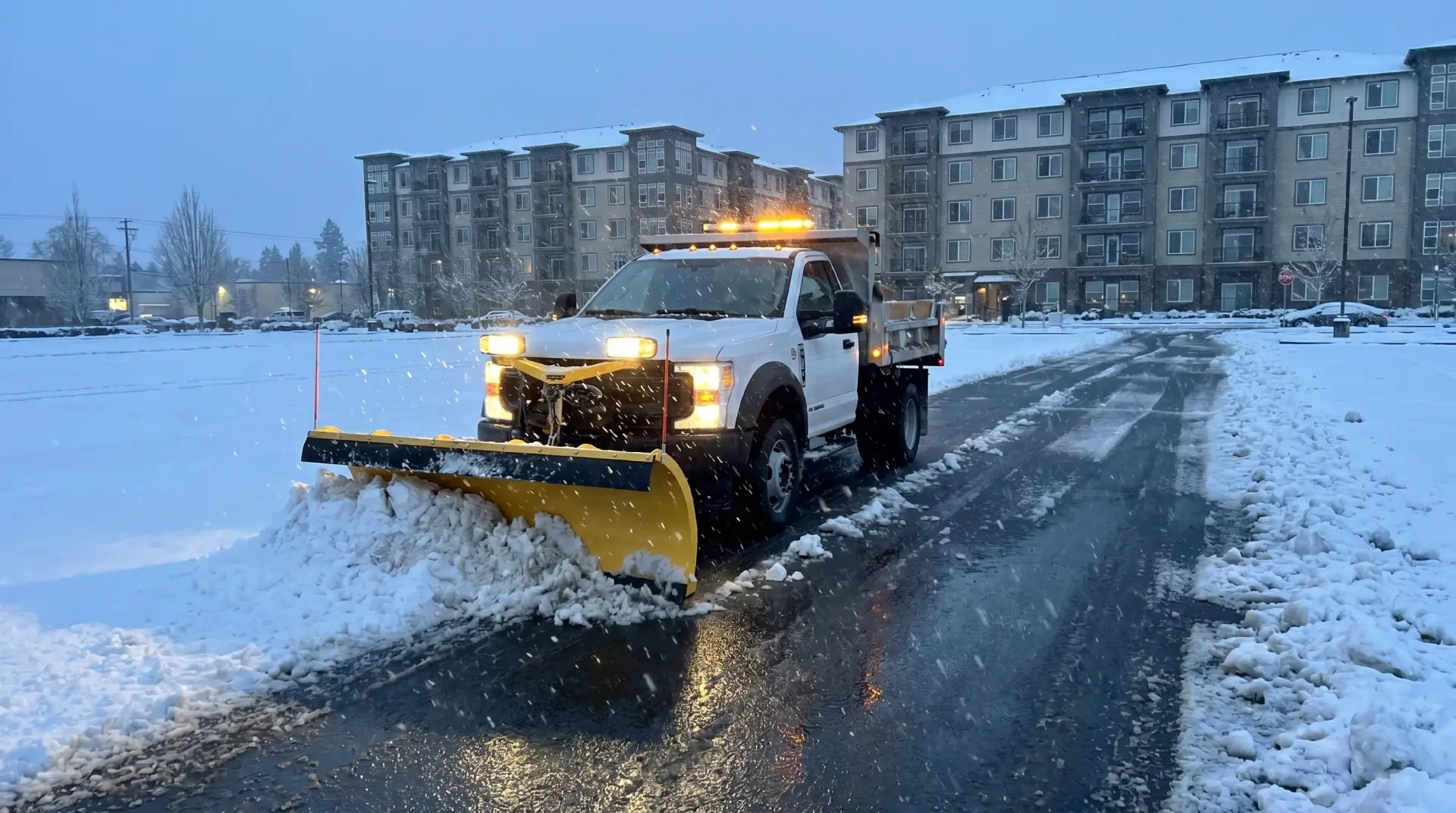
Plow trucks dispatched at predetermined accumulation thresholds spelled out in your contract. We clear parking lots, drive lanes, fire access roads, and dumpster approaches so tenants, customers, and emergency vehicles keep moving even mid-storm. Snow is piled in pre-designated stacking zones to preserve usable parking.
Liquid brine treatment applied 24 to 48 hours ahead of a forecasted ice or snow event. Brine prevents bonding to pavement, which means any subsequent plowing comes up cleaner and any follow-up deicer works at lower application rates. It is the single most cost-effective tool in winter operations and most contractors skip it.
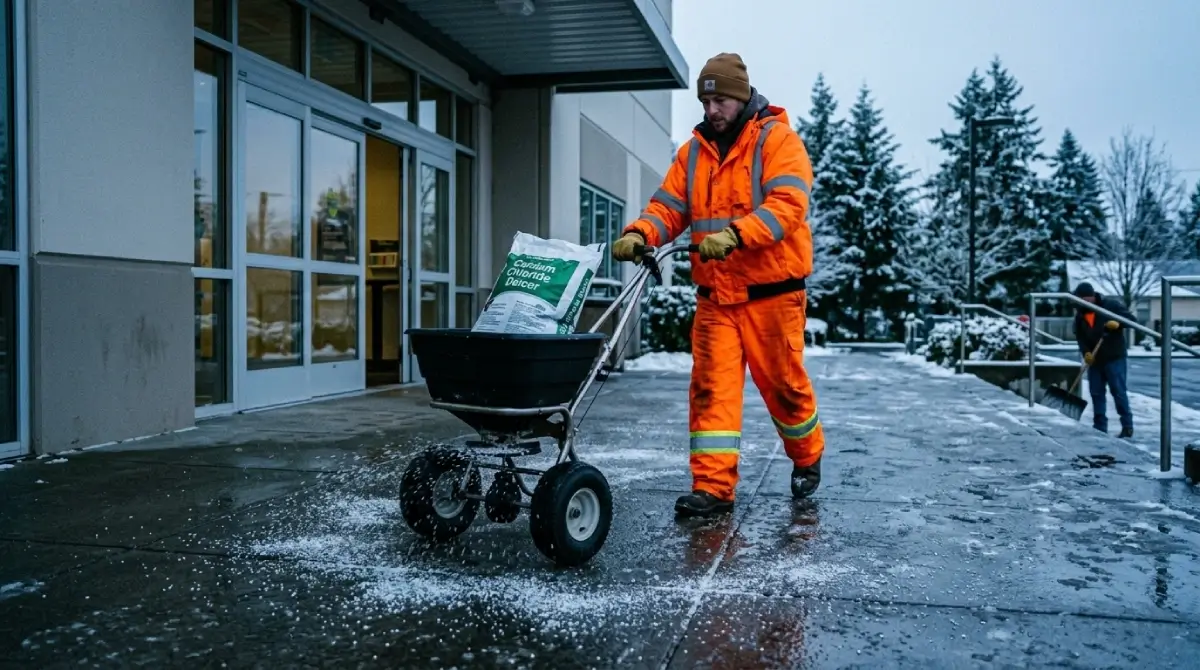
Entries, public-facing sidewalks, ADA ramps, and stair treads are cleared by hand and treated with calcium chloride or magnesium-based deicer to eliminate slip-and-fall liability. We follow ADA-compliance pathing and the local municipal sidewalk ordinance, so the property owner stays clear of the citation and the lawsuit.
very property manager who has lived through a Portland ice event has a story. Most of them are expensive.
$30K, $100K+
Premises-liability claims in Oregon and Washington routinely settle in this range, and severe cases involving fractures, head injuries, or older claimants climb well past it. A single uncleared walkway can wipe out a decade of contract savings.
Lost Revenue
A retail center with an unplowed lot is a retail center with no customers. A multifamily property with iced-over walkways gets move-in cancellations, complaints to leasing, and online reviews that hurt occupancy for months after the snow melts.
Pavement Damage
Untreated ice that refreezes inside concrete and asphalt cracks accelerates spalling, potholing, and surface deterioration. Three winters of skipping deicer can mean tens of thousands in resurfacing the property would not have needed.
2 to 3x Premium
Contractors called reactively at 3am, in the middle of a regional storm, with no prior relationship, charge storm-rate emergency premiums (when they answer at all). A contract locked in by November costs a fraction of the reactive scramble.
A four-phase winter operations plan that starts days before the first flake falls and ends with a documented service record in your inbox.
Our dispatch tracks National Weather Service forecasts five to seven days out. When probable accumulation or freezing-rain potential crosses your contract trigger, we call the property manager directly so there are no surprises.
Liquid brine and anti-icing solutions go down on high-priority surfaces 24 to 48 hours ahead of the event. This step alone often eliminates the need for repeated reactive deicer applications and keeps storm response cost predictable.
Crews dispatch at the trigger threshold defined in your contract, typically one or two inches of accumulation. The plow circuit prioritizes drive lanes, ADA paths, entries, and emergency access, then comes back for secondary parking once the storm slows.
Final sweep, deicer reapplication on critical paths, and photo plus time-log documentation delivered to the property manager. The record protects you on insurance claims, ADA complaints, and any tenant disputes that surface later.
Lovett has been managing commercial property infrastructure since 1997. Snow and ice service is a direct extension of our 24/7 emergency response capability, the same dispatch, the same fleet, the same crews that already handle plumbing and excavation emergencies for our property management clients. When you call us in February at 4am, you reach a live dispatcher who knows your building, not an answering service.
Our winter contracts are built for properties where access, accessibility, and liability documentation are not optional.
Resident access from the parking lot to the front door is non-negotiable. We clear and treat entry walks, ADA ramps, leasing office approaches, and amenity paths so tenants can get to work, deliveries can reach the door, and your leasing team is not fielding slip complaints all morning.
Customers do not park where the lot is icy and employees do not show up if they cannot get to the door safely. We prioritize customer parking, employee access, and tenant frontage so every storefront in the center can open on time, even when the rest of the city is shut down.
Loading docks, fleet staging, and yard circulation areas are kept clear for trucks and forklifts. Industrial sites often have larger snow stacking footprints and require heavier equipment than retail, and our fleet is sized for both.
Schools, government facilities, public-right-of-way work, and institutional campuses get clearing that meets jurisdictional and ADA compliance standards. We provide the documentation packets municipal risk managers require for incident review.
One contractor for every infrastructure call, year-round.

24/7 commercial plumbing and water mitigation dispatch for pipe bursts, sewer backups, and storm-driven flooding events.
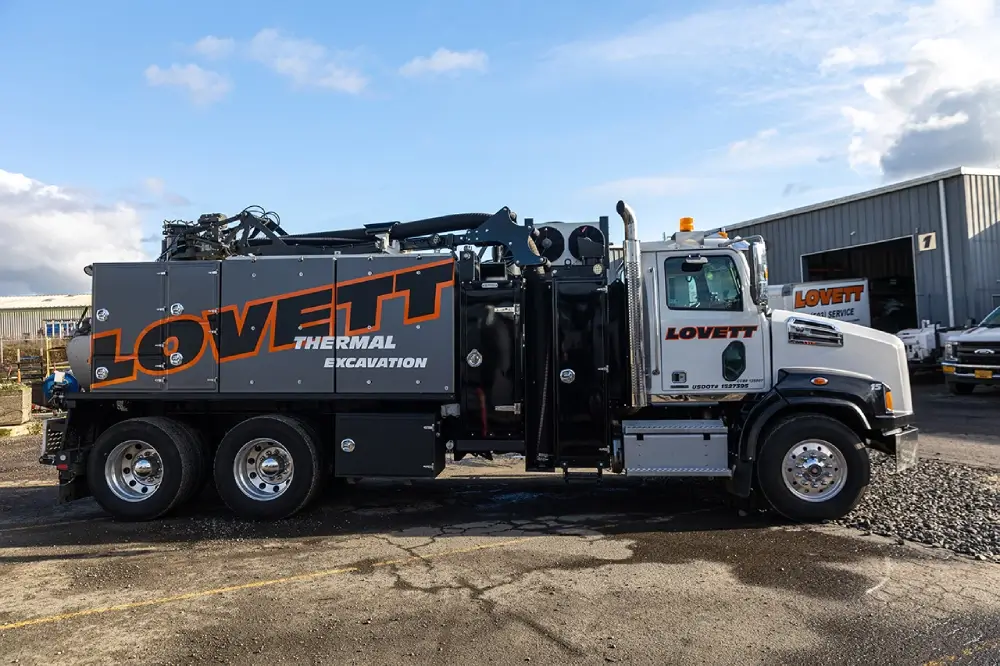
Hydrovac excavation for storm-drain cleanouts, frozen catch basin recovery, and underground utility daylighting throughout winter.
Catch basin cleaning, detention pond service, and stormwater infrastructure maintenance to keep meltwater moving when temperatures rise.
What property managers ask before locking in a winter contract.
We offer two contract structures. A flat seasonal rate covers all storm events from November through March for a single fixed price, ideal for budget predictability. A per-event contract bills only when a defined accumulation threshold (typically 1 or 2 inches) is met, with documented trigger criteria spelled out in writing before the season starts. Both options include priority dispatch and full documentation of every visit.
Portland typically sees one to three meaningful snow events per winter, but freezing rain and ice storms are far more common. Most slip-and-fall liability and property damage comes from ice, not snow. Our pre-storm anti-icing service exists specifically because ice events happen 8 to 12 times in an average Portland winter while accumulating snow may only happen once or twice.
Yes. Our hand crews clear public sidewalks, entry walks, ADA ramps, stair treads, and accessible parking paths. We are familiar with Portland and Vancouver municipal sidewalk clearing ordinances and ADA compliance requirements for commercial properties, including the 24-hour clearing deadlines most jurisdictions enforce.
For aggressive ice melt down to very low temperatures we use calcium chloride. For applications near landscaping, where pet traffic is heavy, or where concrete is newer than one year, we use magnesium chloride or potassium-based blends that are gentler on plants, paws, and curing concrete. We match the product to the surface and the situation rather than using a single one-size-fits-all bag.
Yes. Every contract spells out the trigger threshold (such as 1 inch accumulation or a freezing rain event) and the response window after that trigger is met. Each visit is documented with photos and timestamps and submitted to your property manager so you have a complete record for insurance, tenant relations, and ADA compliance purposes.
We accept storm-rate emergency calls when capacity allows, but contracted clients always get priority. During major events our trucks may be booked out for 24 to 48 hours on contract routes before we can take new calls. Locking in a contract before November is the only way to guarantee response when the first storm hits.
Contracts secured by November are guaranteed response priority when storms hit. Properties that wait until the first flake falls compete for whatever capacity is left, and there usually is not much. Call now for a seasonal quote or send us your site map and we will price it the same week.
