
$600
Per month, all-in
0
Backups since we started
$100K
Avoided in emergency costs
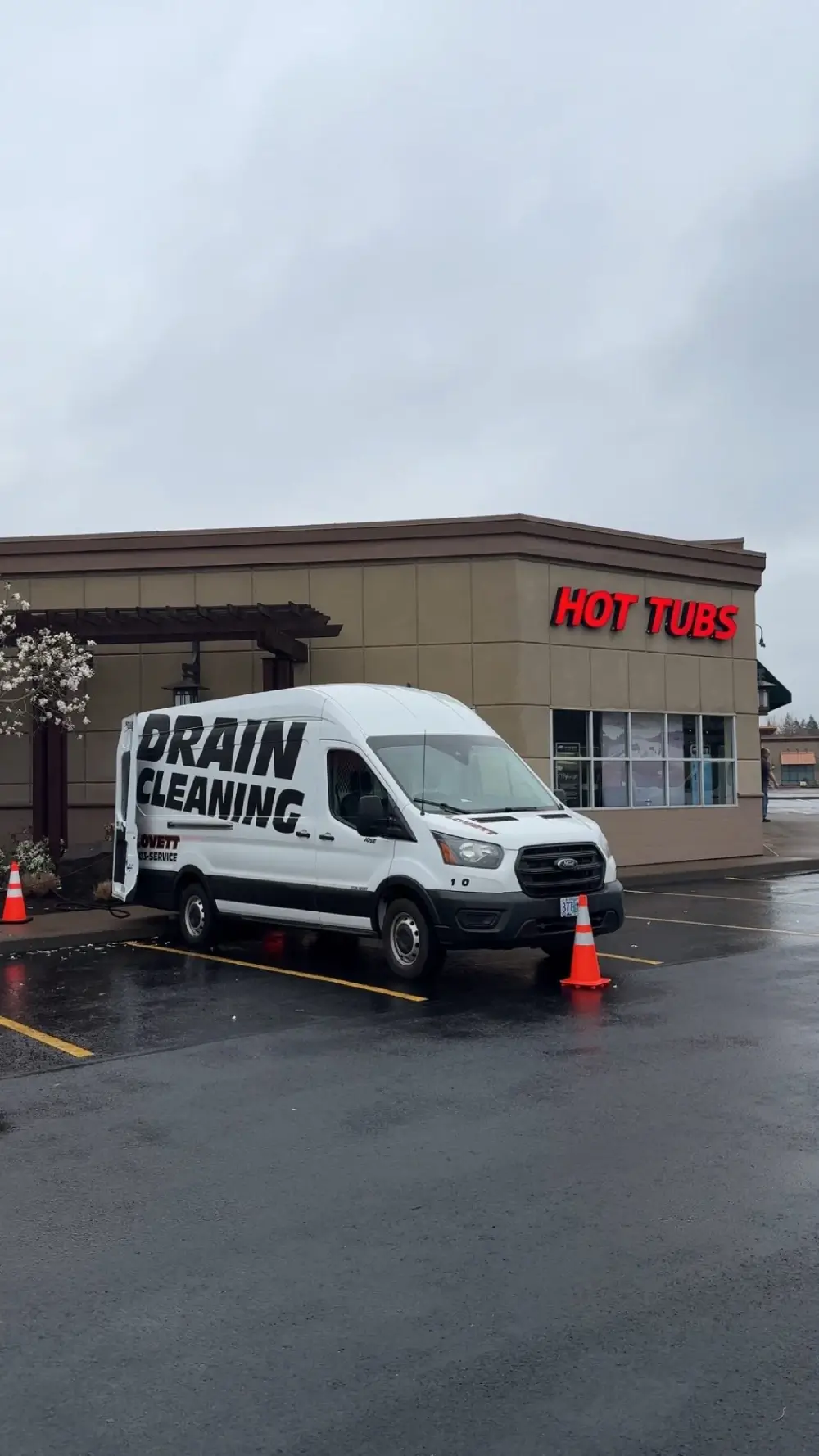
The Job Site
A Camera Inspection Revealed Something the Owner Never Saw Coming
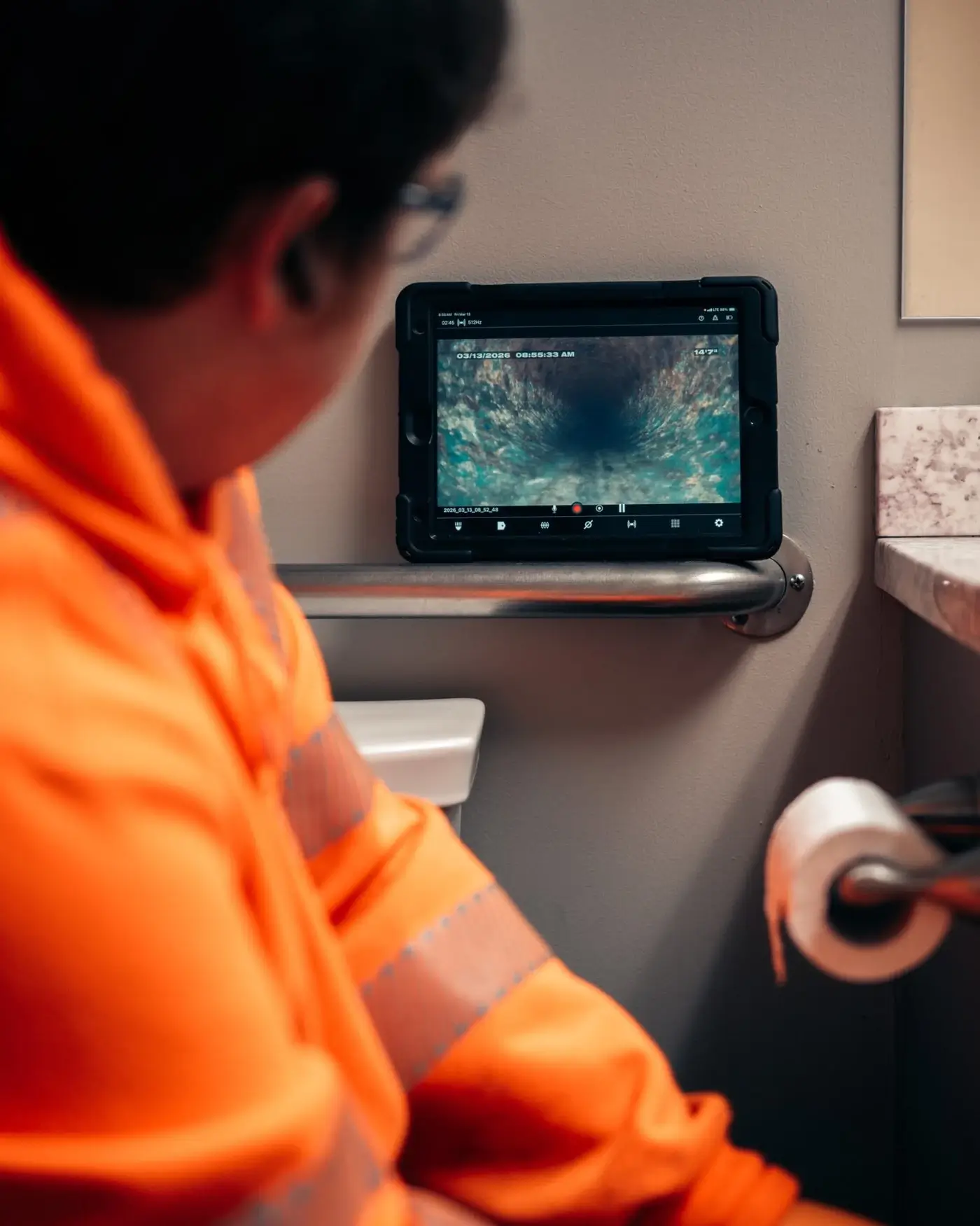
The showroom had been dealing with recurring plumbing slowdowns. Toilets that took too long. Drains that gurgled. The kind of nuisance that gets explained away as “old building” until it stops being a nuisance.
When we ran a camera down the line, the picture was unambiguous: significant bellies, multiple low spots, sagging through the pipe buried deep beneath the concrete slab.
This wasn’t a clog. It was a structural failure of the line itself. And because everything wrong was sitting under a concrete floor inside an active retail business, there was no quick fix.
What Is a Sewer Belly?
A Permanent Low Spot
A belly is a sag in an underground pipe, a section that has dropped below the proper drainage grade. Instead of gravity pulling waste smoothly through the line, it pools in that dip.
It Always Gets Worse
The pool collects standing water and debris. Over time it fills, the line restricts, and eventually everything upstream backs up. Bellies don’t heal themselves, they only deepen.
Signs Your Property Might Have the Same Problem
If any of these patterns sound familiar, the cause is probably deeper in the line than the last plumber found.
Frequent Toilet Backups
If toilets keep backing up after being snaked, the real problem is downstream, not at the fixture.
Slow Drains Everywhere
When several drains run sluggish at once across the building, you're looking at a shared mainline issue.
Foul Odors
Standing sewage in a belly ferments. If you smell waste with nothing visibly clogged, something is sitting where it shouldn't.
Repeat Clogs
If you're paying a plumber every few months for the same issue, the symptom keeps coming back because the cause hasn't been diagnosed.
What Happens When You Ignore a Sewer Belly
Facility-Wide Slowdowns
Toilets get sluggish first. Sinks follow. Then customers notice, which means staff already noticed.
Accelerated Pipe Deterioration
Standing waste corrodes pipe walls from the inside. A sag that was once cosmetic turns into a crack.
Raw Sewage Backups
When the belly fills, waste reverses direction, onto floors, into walls, into product inventory.
Complete Pipe Collapse
A corroded belly under a slab can give way without warning. There is no slow leak phase before catastrophic failure.
Health Code Violations
Sewage exposure triggers mandatory inspections. In retail, that often means a forced closure during peak hours.
Emergency Response Costs
After-hours call-outs, water mitigation, and biohazard remediation can dwarf the cost of a planned repair by an order of magnitude.
Three Options on the Table
Every property manager facing this problem has the same three choices. Here’s the honest math on each one.
Option A
Potential losses from emergency remediation, raw sewage damage, forced closure, and health violations.
Option B
Hydro jet the line on a fixed monthly schedule. Camera inspect after every session. Zero backups since we started.
Option C
Cut the slab, excavate, replace the failed sewer line interior, the destination, the actual permanent fix.
Monthly Jetting + Camera Verification
A repeatable three-step protocol that keeps a deteriorating line from becoming an emergency, and gives the property manager documented evidence the building is safe.
Monthly Jetting + Camera Verification
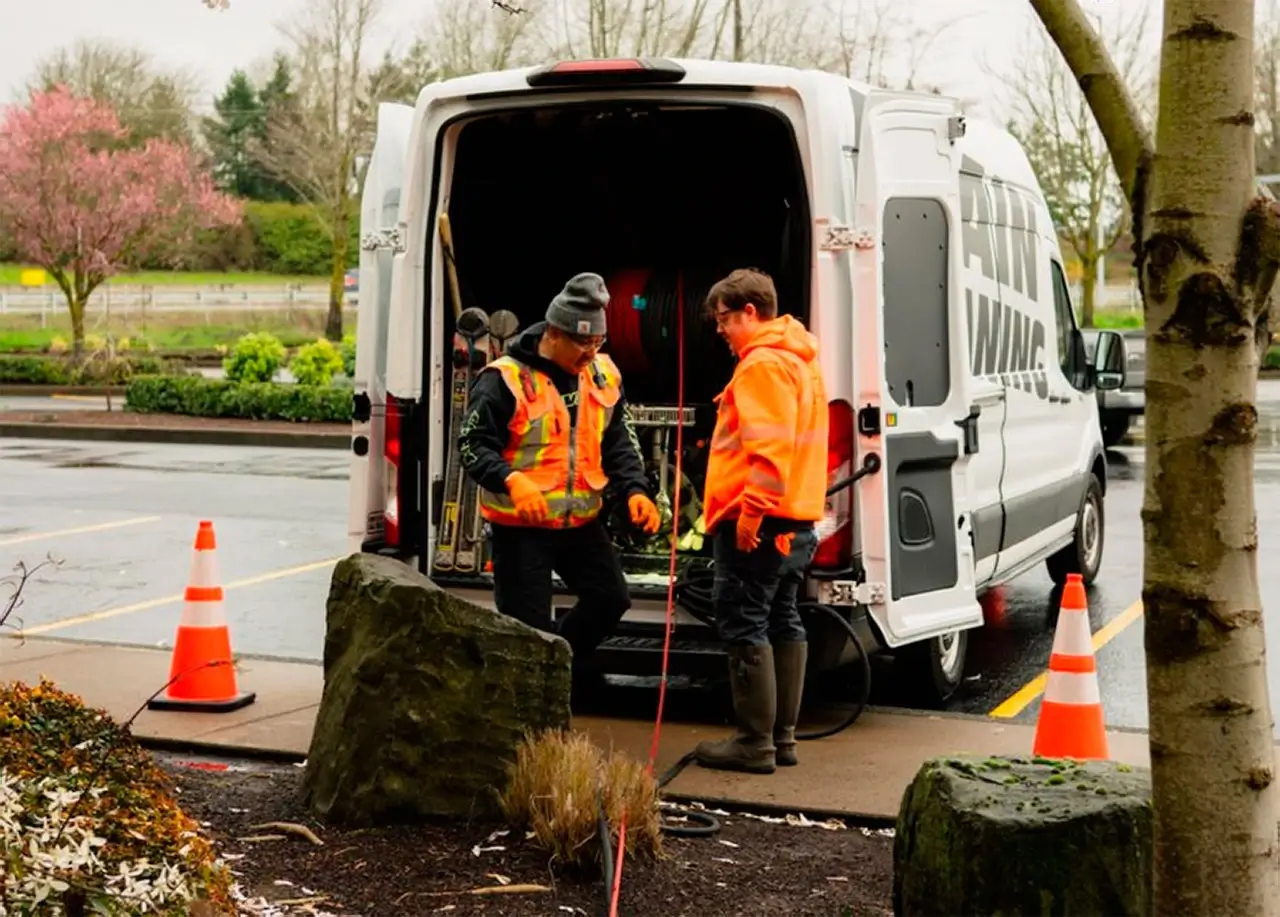
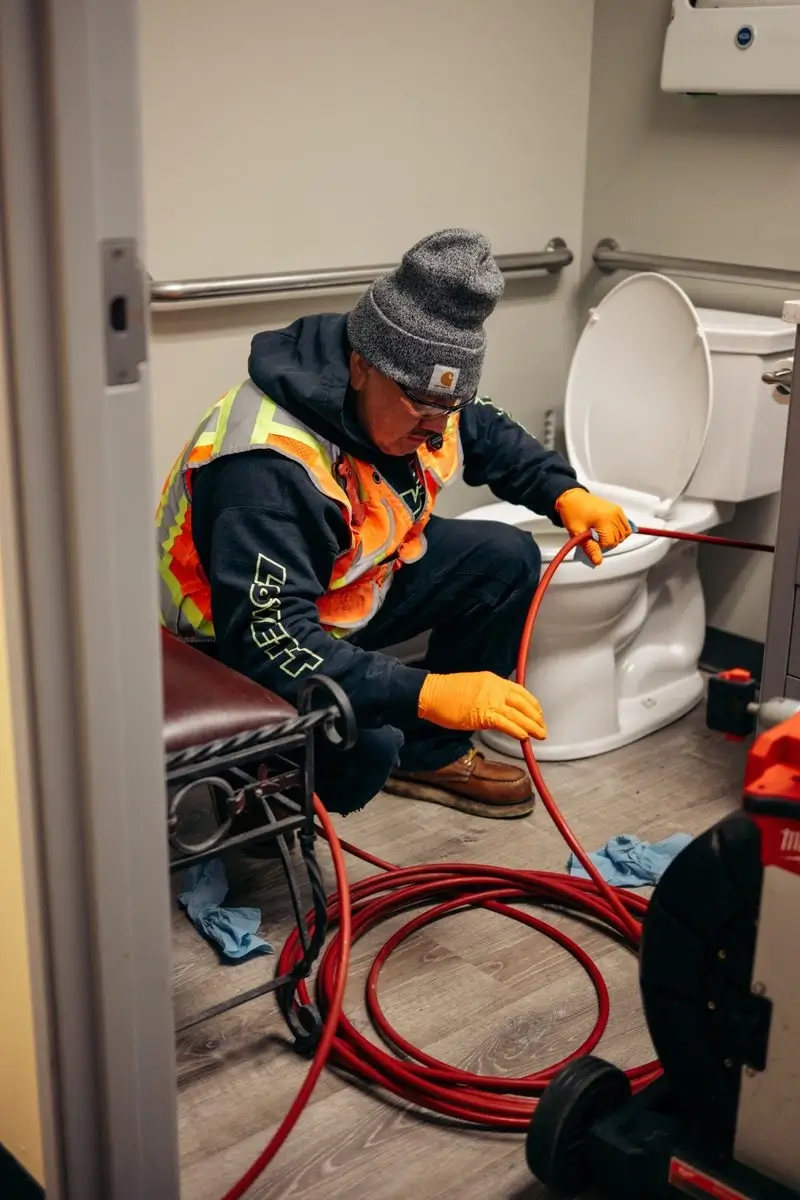
High-pressure water clears debris from the line before enough accumulates to create a blockage. By running it on a fixed monthly schedule, we stay perpetually ahead of the problem instead of chasing it after the fact.
Post-Jet Camera Inspection
After every jetting session, we run a camera down the line to confirm it ran clean. No guessing whether the work succeeded, the property manager sees the same footage we do, archived as proof.
Documented Condition Over Time
Each inspection compounds into a real record of how the pipe is behaving month over month. That history is invaluable when it’s time to plan the replacement, justify the capital expense, or document due diligence for insurance.

The Honest Part
Monthly jetting is not a permanent fix. The belly under the slab is still there, and at some point the pipe will need to come out and be replaced.
What this plan does do: it eliminates the immediate danger of a backup, protects the business from an unplanned shutdown, and gives the property manager a real runway to plan and budget for the right repair.
We’d rather tell you the truth now than be called in for the emergency later.
Dealing with a Recurring Sewer Issue?
We’ll camera-inspect the line, give you a straight diagnosis, and lay out your options, including the most cost-effective path forward.